As an Amazon Associate, we earn from qualifying purchases. Some links on this site are affiliate links at no extra cost to you. Our recommendations are based on thorough research and editorial judgment.

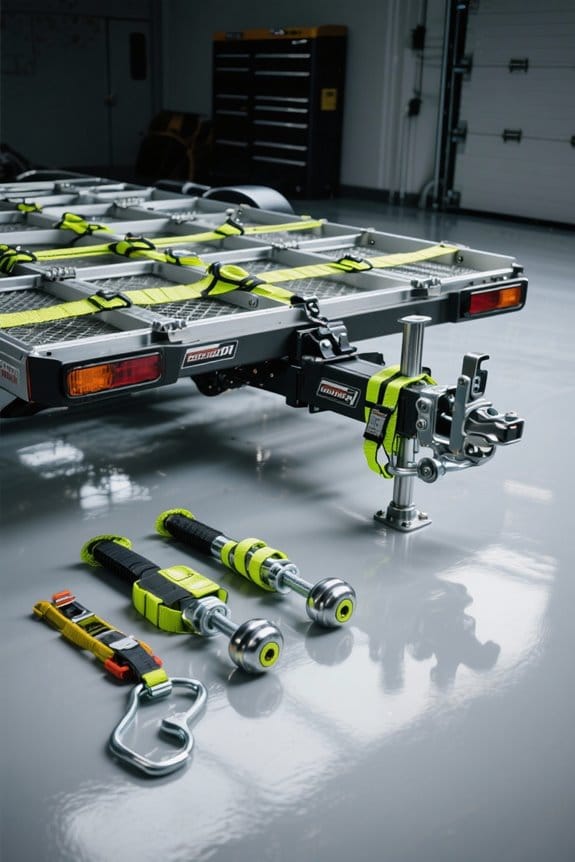
Hitch Cargo Setup: Balance, Tie‑Downs, And Visibility Considerations

A proper hitch cargo setup is vital for safe towing. Start with balanced weight distribution—aim for 60% of the load near the front for stability. Position heavy items low and close to the hitch to lower the center of gravity. Secure everything with strong tie-downs, using two for bulky items over five feet. Don’t forget visibility; reflectors and good lighting are essential at night. Stick around to explore best practices and safety regulations that keep your cargo secure.
Key Takeaways
- Distribute cargo weight with 60% in front of the axles to enhance stability and prevent trailer sway.
- Use the 10-15% rule for tongue weight to maintain control and ensure safe towing.
- Secure cargo with effective tie-downs, using one tie-down for every ten feet of cargo for stability.
- Inspect tie-downs monthly to ensure they are secure, functional, and offer secondary locks for added safety.
- Improve cargo visibility by using reflectors and adequate lighting, especially during nighttime transport.
Importance of Weight Distribution
You may be interested



Understanding the importance of weight distribution is crucial for safe and efficient towing. Proper load balancing prevents the rear of the tow vehicle from sagging and enhances steering and braking performance. An even weight distribution keeps both the tow vehicle and trailer level, which is key for sway prevention. When the load is balanced, trailer sway risks drop markedly, improving overall safety. Weight distribution hitches are invaluable tools. They shift tongue weight from the rear to maintain control and stability. This correct positioning guarantees tires grip the road effectively, enhancing handling. Additionally, balanced loads reduce wear on parts, extend their lifespan, and can even improve fuel efficiency. By mastering weight distribution, you set the stage for a successful towing experience. Many hitch mount bike racks include features like soft clamps and wheel stoppers to secure bikes, which also aid in maintaining balanced weight distribution during transport.
Centering Cargo Over Axles

Proper cargo centering over the axles is essential for stability while towing. Achieving the best cargo weight distribution is key. Aim to place about 60% of the trailer’s weight in front of the axles and 40% behind. This 60/40 rule helps maintain good axle alignment and control. Concentrating the load near or directly over the axles decreases rotational inertia, making the trailer more stable. Avoid loading heavy items too far forward or back, as this can lead to excess tongue weight or increased sway. A balanced load enhances braking effectiveness and spreads wear evenly across tires. Regularly check your cargo placement to keep everything aligned. Following these guidelines not only boosts safety but also promotes a smoother towing experience. When using hitch cargo carriers, ensure compatibility with 2-inch hitch receivers to secure the carrier properly and maintain balance.
Positioning Heavy Items for Stability

When it comes to towing, the way heavy items are positioned can greatly impact stability. For ideal cargo stability, place heavy items centered and close to the vehicle. This reduces leverage and limits sway. Always position heavier cargo at the bottom of the hitch carrier, lowering the center of gravity. This strategy improves balance and minimizes rollover risk during turns. Avoid stacking heavy items high or at the rear, as this raises the center of gravity. Also, aim for about 60% of the load weight towards the front of the carrier to maintain proper tongue weight. Regularly check for an even side-to-side distribution to prevent tipping. Careful heavy item placement guarantees safe towing and smooth vehicle handling. For maximum protection, consider using waterproof features in your hitch cargo bag to safeguard belongings from rain and splashes.
Risks of Improper Weight Placement
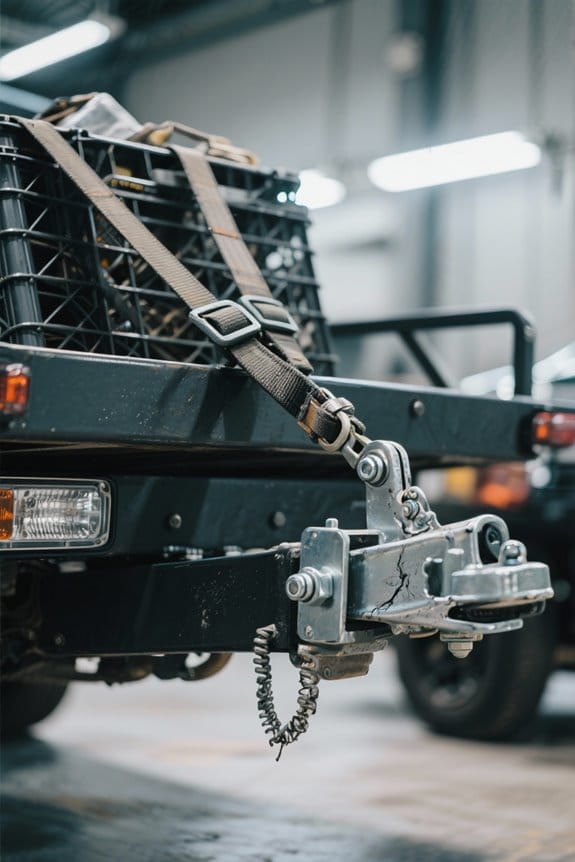
Improper weight placement can create significant risks for towing. It often leads to reduced vehicle control, increasing the chances of accidents. For instance, a rear-heavy load can impair steering and braking, making sharp turns perilous. Additionally, overloading one side of the trailer can cause uneven tire wear, which shortens its lifespan. This not only affects safety but also impacts equipment longevity. Proper weight distribution is essential for accident prevention. Aim for about 10-15% of the trailer’s weight on the tongue; this helps stabilize the trailer and boosts control. Any sudden shifts in cargo can worsen instability, especially during wind or turning. Ultimately, balanced loads enhance both your safety and your equipment’s durability. Furthermore, utilizing anti-spark technology in jump starters can prevent ignition hazards during roadside emergencies, adding an extra layer of safety when managing unexpected vehicle breakdowns.
Tie-Down Methods for Secure Transport
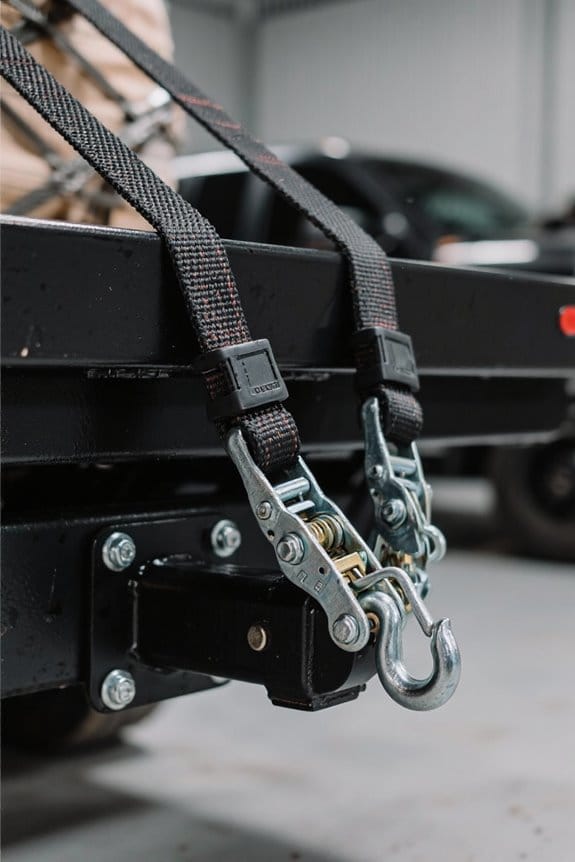
Achieving stability while towing isn’t just about weight placement; secure tie-downs are equally important. Using effective load harnessing techniques can make all the difference. The Trucker’s Hitch, for example, allows users to leverage a 2:1 mechanical advantage. This not only eases the effort of securing loads but also enhances safety. Ratchet straps are preferred for their durability. However, verifying they are correctly tensioned is essential; too tight can damage cargo. Edge protectors help reduce wear on straps, verifying longevity. Always adhere to tie-down quantity regulations—one for every ten feet of cargo. As a final tip, make sure all tie-downs have secondary locking mechanisms as impact reduction strategies. Properly securing your cargo should always be the priority. When choosing tie-downs, consider options like SmartStraps which feature non-marring hooks to prevent damage during transport.
Types of Tie-Down Anchors
Understanding the types of tie-down anchors is essential for safe cargo transport. The D ring benefits include their strength and versatility, commonly used for securing straps. They can handle loads from 5,000 to 15,000 lbs, making them ideal for various applications. Rope ring applications serve a different purpose, specifically for tying down with ropes. These rings are often rated for 2,000 to 10,000 lbs, making them suitable for medium to heavy loads, such as in marine settings. Other types include surface-mount anchors that are bolted directly onto surfaces for easy installation, and recessed mounts that sit flush for a low profile. Understanding these options allows users to choose the best anchor for their specific cargo needs. Many hose nozzles, such as the AUTOMAN Brass Nozzle, are designed with durable construction that can withstand the pressure of heavy-duty tasks, similar to how D rings handle heavy loads.
Essential Knots and Hitches for Safety
Once the right tie-down anchors are in place, the next step is securing cargo effectively with knots and hitches. Choosing the right knot types enhances safety during transport. The Prusik Hitch provides tension maintenance and controls loads without slack. Meanwhile, the Trucker’s Hitch is excellent for secure fastening, offering up to a 3:1 mechanical advantage. It can be finished with quick release knots, allowing for swift unloading. Additionally, Bowline and Figure Eight knots create reliable anchor loops, while the Clove Hitch secures lines efficiently. For temporary needs, consider quick-release hitches like the Highwayman’s Hitch, designed to release easily. Understanding these essential knots and hitches guarantees your cargo remains safe and secure throughout the journey. When dealing with inflation tools, consider automatic shut-off features which prevent over-inflation and ensure safety during use.
Ensuring Cargo Visibility
Visibility is vital when transporting cargo. Drivers must guarantee that their rear license plates are fully visible and unobstructed. This is critical for license plate compliance, as obscuring it can lead to fines or traffic stops. Many hitch cargo carriers include a license plate relocation bracket to keep things legal. In addition to the plate, taillights and turn signals must remain visible. If tall or wide cargo blocks these lights, installing auxiliary lighting becomes necessary. Some states even require additional reflectors on the carrier. Heavier shift knobs provide stability and precision, similar to ensuring cargo remains secure and visible during transport.
Safety Regulations for Cargo Securing
Safety regulations for securing cargo are essential for anyone involved in transporting goods. The Federal Motor Carrier Safety Administration (FMCSA) mandates that all cargo types be properly secured to prevent any accidents on the road. Cargo must be immobilized with adequate structures, tie-downs, or combinations. Tie-downs depend on the size and weight; for instance, two are necessary for cargo over five feet. These securement methods must withstand significant forces during travel, ensuring nothing shifts or falls. To further enhance transport efficiency, consider using durable materials like 600D Oxford polyester or faux leather for any cargo organizer used. Both drivers and employers bear the legal responsibility to comply with these standards. Violating these regulations not only risks penalties but also compromises safety. Understanding these regulations helps keep roads safe for everyone.
Best Practices for Regular Inspection
Regular inspections are the backbone of keeping a hitch cargo setup safe and functional. To guarantee reliability, use simple inspection techniques. Conduct visual inspections every month and after long hauls. Check the hitch assembly for any cracks, rust, or deformation. Use a flashlight in tight spots, and lightly tap welds with a hammer to check for fatigue. Leakproof design features in car trash bags can serve as inspiration for ensuring that your cargo setup remains secure and free from damage due to leaks or spills. Create and follow maintenance schedules. Clean all components after use, especially after exposure to salt or grime. Lubricate moving parts regularly with quality grease to preserve functionality. Confirm that your hitch weight ratings and brake systems are working properly.
Frequently Asked Questions
What Materials Are Best for Tie-Down Straps?
Nylon straps and ratchet straps are ideal for tie-downs due to their high breaking strength and abrasion resistance. However, polyester straps are often preferred for outdoor use due to better UV resistance and durability.
How Do Weather Conditions Affect Cargo Securing?
Weather conditions notably affect cargo securing; rain hazards can reduce friction, while high winds introduce lateral forces, complicating securement. Proper attention to these factors is essential for maintaining stability and safety during transit.
Can I Use DIY Tie-Down Solutions?
Certainly, DIY alternatives can assure tie-down effectiveness—until they don’t. With proper materials and techniques, enthusiasts can create secure systems, yet the irony lies in potentially underestimating risks inherent in homemade solutions. Safety is paramount.
What Are the Consequences of Not Following Regulations?
Failing to follow regulations results in legal repercussions, including fines and potential imprisonment. Safety violations heighten risks of accidents, liability, and loss of insurance coverage, severely impacting individuals or businesses involved in transporting cargo.
How Can I Determine My Trailer’s Weight Limit?
In a world of wheeled wonders, determining a trailer’s weight limit begins with identifying the Gross Vehicle Weight Rating (GVWR) and subtracting the empty weight to find the load capacity, ensuring safe transport.