As an Amazon Associate, we earn from qualifying purchases. Some links on this site are affiliate links at no extra cost to you. Our recommendations are based on thorough research and editorial judgment.


Caliper Cleaning 101: Safe Detailing Brushes And Techniques

Cleaning brake calipers is essential for safety and performance. Use soft and stiff-bristle detailing brushes to reach tough spots. A non-chlorinated brake cleaner will protect rubber parts while effectively removing grime. Start by safely elevating the car and spraying the cleaner on the calipers. Then, scrub with your brushes and rinse well. Finally, dry the calipers with a microfiber towel. Keeping up with this routine guarantees better braking efficiency and a clean look. More tips will follow.
Key Takeaways
- Utilize soft and stiff-bristle detailing brushes (16 mm to 30 mm) for effective cleaning of calipers and hard-to-reach areas.
- Apply a non-chlorinated brake cleaner specifically formulated for brake components to avoid damage to rubber parts.
- Work in a well-ventilated area while wearing gloves and safety glasses for protection during the cleaning process.
- Rinse thoroughly with water after cleaning to remove all brake cleaner residue, ensuring optimal caliper performance.
- Consider applying a high-temperature ceramic coating post-cleaning to protect against moisture and enhance the appearance of calipers.
The Importance of Brake Caliper Maintenance
You may be interested

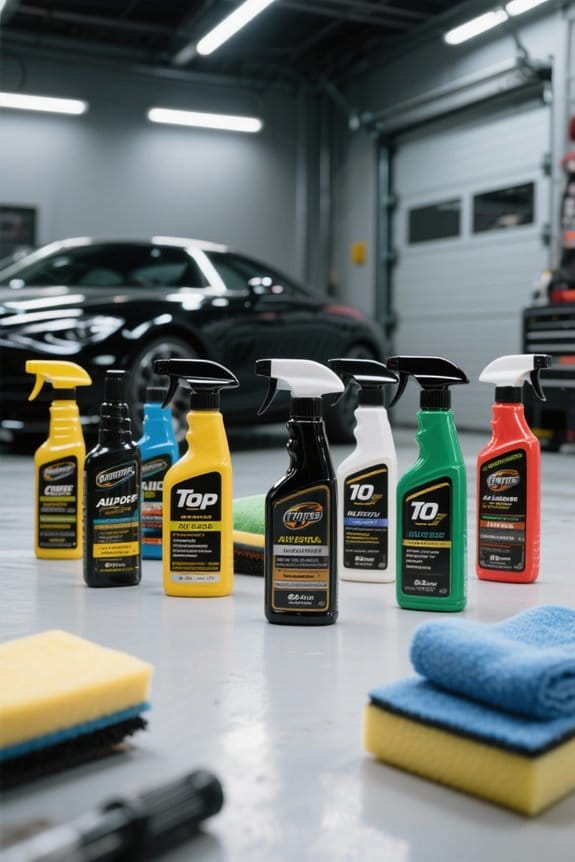

Brake caliper maintenance is crucial for any vehicle owner. These components play a significant role in the braking system by clamping the brake rotors effectively. Regular maintenance of brake calipers guarantees they perform at their best. When brake dust and grime accumulate, they can hinder the caliper movement, which negatively affects safety and performance. Using a suitable cleaning solution can remove this buildup, enhancing the calipers’ durability while preventing corrosion. Maintaining clean brake calipers also contributes to the attractive appearance of your wheels. By incorporating caliper cleaning into your regular vehicle upkeep routine, you extend their lifespan and promote safety on the road. Remember, a little effort goes a long way in preserving the ideal performance of your braking system. Choosing an acid-free and pH-balanced brake dust remover ensures that the calipers and wheels are cleaned effectively without risking damage.
Gathering the Right Tools and Materials
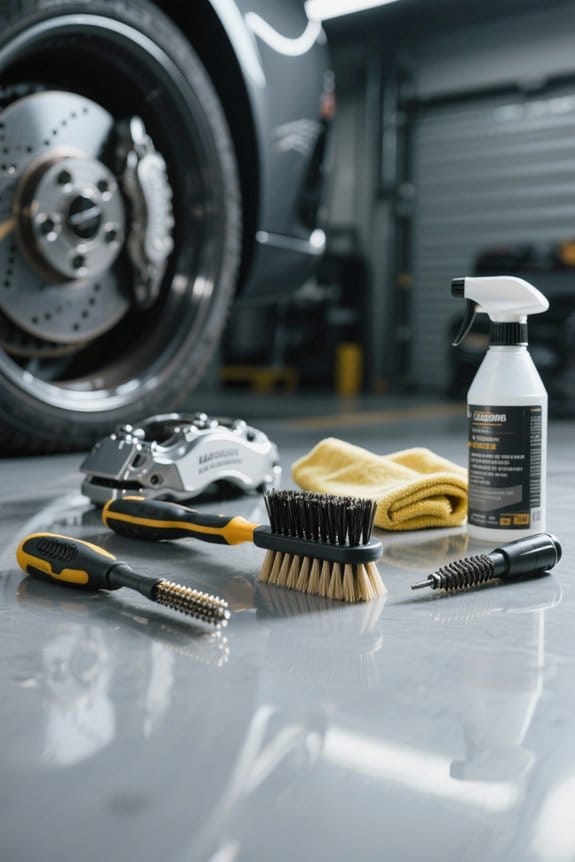
Gathering the right tools and materials is essential for effective caliper cleaning. Start with soft and stiff-bristle detailing brushes in sizes ranging from 16 mm to 30 mm. These will help you reach the intricate areas of the brake calipers without scratching the surface. You’ll also need a high-quality, non-chlorinated brake cleaner formulated for brake components. Microfiber cloths are a must for drying and polishing afterward, preventing any damage. Consider a wheel brush for cleaning inside wheel barrels; it keeps dirt from dragging across your freshly cleaned calipers. Finally, have protective products like ceramic sealants handy. These guarantee your calipers stay clean longer and look great in your car detailing routine. AROIC Car Air Freshener Diffuser offers luxury scents that can enhance the overall environment of your vehicle, making your detailing efforts even more rewarding. Happy cleaning!
Safety Precautions for Caliper Cleaning
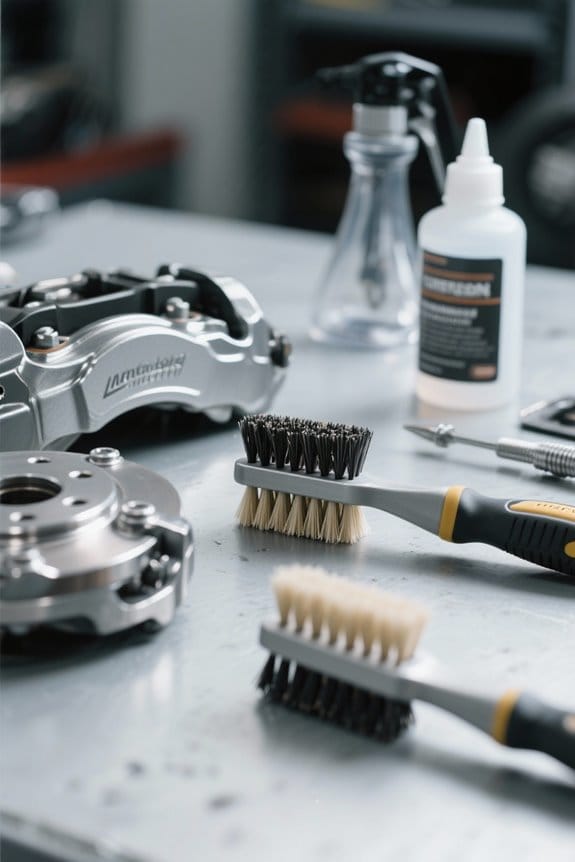
Working on calipers can be a satisfying task. However, safety is essential. Always wear gloves and safety glasses to protect against chemical splashes and loose dirt and brake debris. Before you begin, verify the vehicle is parked on a level surface with the parking brake engaged. This prevents any accidental movement while you clean. Using wheel chocks behind the wheels adds extra security. It’s also important to work in a well-ventilated area to avoid inhaling harmful fumes from brake cleaners. When using water, avoid soaking electrical components or seals around the calipers to maintain functionality. Regular cleaning guarantees that your calipers perform at their best and last longer. Professional consultation is recommended for optimal repair strategies, ensuring you have the right approach and tools for the task. Remember, good safety habits keep the task enjoyable and secure.
Recommended Products

【Heavy-Duty Chemical Resistance】High-end nitrile gloves possess excellent chemical resistance, providing a tough barrier against harsh substances such as industrial solvents and cleaners, so you can handle lab work or heavy-duty tasks with confidence.

SCRATCH-RESISTANT & ANTI-FOG LENSES: Designed with scratch-proof safety glasses and anti-fog safety glasses technology, these lenses filter 99.5% of harmful UV rays, providing clear vision and reliable eye protection in any condition.

JUST ADD WATER - NO DETERGENTS NEEDED – No Chemicals, Window Glass Cleaning Cloth cleans with only water, without dangerous ingredients that can harm you - Works like magic, You Will Be Amazed
Initial Assessment of Brake Calipers
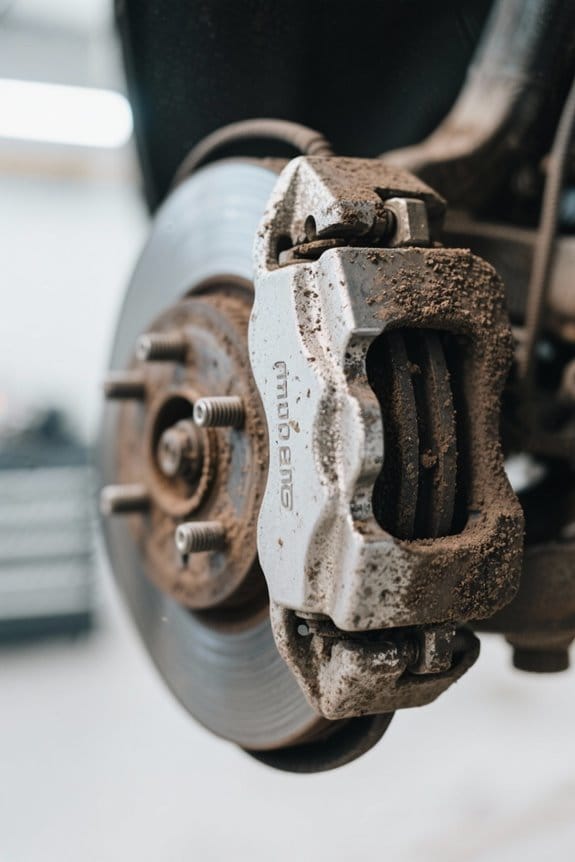
How can one truly assess the condition of brake calipers before diving into cleaning? Begin with a visual inspection. Look for signs of corrosion or wear. Excessive brake dust accumulation can hinder caliper movement, reducing braking efficiency. Check to verify there’s no leaking brake fluid, as this poses safety risks. Next, consider the finish of the calipers. Are they painted surfaces, anodized, or bare metal? This detail affects the cleaning techniques and products used. Confirm that the calipers are securely in place and that the vehicle is parked on a level surface. This prevents any unwanted movement during cleaning. An initial assessment sets the stage for effective and safe maintenance of brake calipers. Additionally, universal compatibility with various vehicle types and caliper configurations is crucial for ensuring the tools used are suitable for the task at hand.
Choosing the Appropriate Cleaning Solution
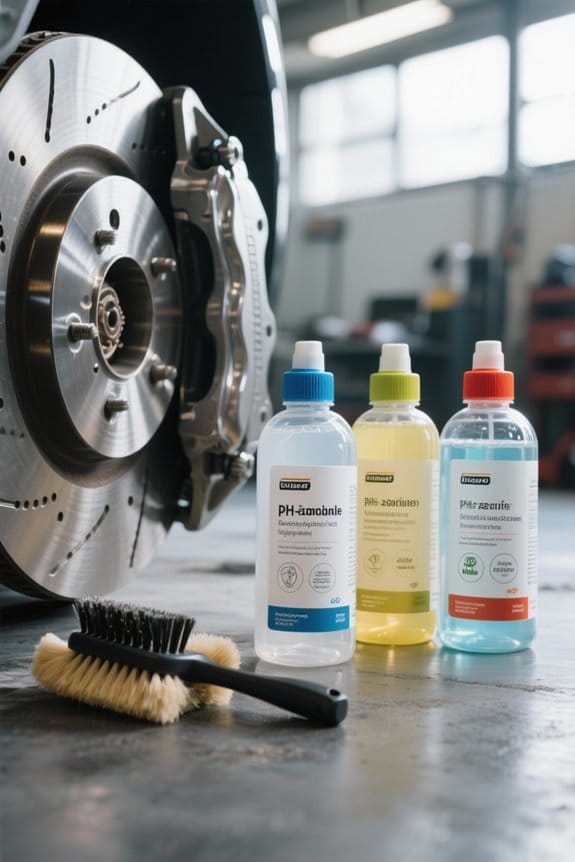
When it comes to choosing the right cleaning solution for brake calipers, a little knowledge goes a long way. It’s best to select products specifically made for brake components. These cleaning solutions effectively dissolve dirt and grime without damaging sensitive brake components. Non-chlorinated brake cleaner is often preferred, as it removes contaminants while protecting rubber parts from harmful reactions. For tougher jobs, consider using an iron fallout remover; it targets embedded contaminants that basic cleaners might miss. Always adhere to the manufacturer’s guidelines regarding dwell time and rinsing instructions to avoid leaving residues. Remember, household cleaners can leave behind residues that might harm your braking performance. Choose wisely for cleaner, safer brakes! For those interested in achieving a high-gloss finish on their vehicle’s paint, selecting a quality polishing compound can make a significant difference.
Recommended Products
![CRC Brakleen 1003663 Brake Cleaner Spray BPC Pro Series Non-Chlorinated 50 State Formula, 20 oz, [1 Pack]](https://m.media-amazon.com/images/I/419hpIALTgL._SL500_.jpg)
BRAKLEEN: Maintaining clean brake and disc parts can improve the life of your car's braking system and keep you safe on the roads. Using Brakleen is a great way to maximize the performance and increase the longevity of your brake system.
![CRC Brakleen 1003695 Brake Cleaner Spray Non-Chlorinated Low VOC, 14 oz, [1 Pack]](https://m.media-amazon.com/images/I/41PX+fjKgtL._SL500_.jpg)
Country Of Origin : China
![CRC Brakleen 1003739 Brake Cleaner Spray Non-Chlorinated Ultra Low VOC, SCAQMD #1171 Compliant, 14 oz, [1 Pack]](https://m.media-amazon.com/images/I/41DNLCb2bUL._SL500_.jpg)
BRAKLEEN: Maintaining clean brake and disc parts can improve the life of your car's braking system and keep you safe on the roads. Using Brakleen is a great way to maximize the performance and increase the longevity of your brake system.
Step-by-Step Cleaning Process
Cleaning brake calipers might seem intimidating, but it can be done with a few straightforward steps. First, safely elevate the car and engage the parking brake. This keeps the vehicle secure during the cleaning process. Next, use a dedicated brake cleaner designed for automotive use. This will effectively remove grime and brake dust without harming your calipers. Employ various soft detailing brushes to reach tricky areas. Gently scrub to avoid damaging any painted surfaces. Once finished, thoroughly rinse with water to wash away all cleaner residue. This step is essential to prevent corrosion. Finally, dry the calipers with a microfiber towel. This prevents water spots and prepares them for a protective coating, enhancing their longevity. High-quality materials prevent scratches during cleaning, ensuring that your detailing process is effective and safe.
Techniques for Using Detailing Brushes
Using detailing brushes effectively can make a significant difference in the cleaning process. Start by selecting the right brush. For painted calipers, opt for soft brushes to prevent scratches. Stiffer brushes can tackle tough grime on unpainted metal surfaces. When using detailing brushes, employ a gentle agitation technique. Move in short strokes to lift dirt without damaging finishes. Regularly rinse the brush to prevent dirt redistribution and keep cleaning power high. For intricate areas, like tight spokes and spring perches, small brushes provide precise access. They can reach those hard-to-get spots with ease. Remember, ergonomic handle designs improve comfort during use, making prolonged detailing sessions less strenuous. The right technique combines choosing the correct brush with smart movement, ensuring your calipers stay clean and protected. Happy detailing!
Final Steps to Ensure Proper Drying
To achieve ideal results, proper drying techniques for brake calipers are essential. The final steps in this process involve confirming that all moisture is eliminated. After cleaning, use a microfiber towel or air blower to remove any remaining moisture. This prevents corrosion and rust, which can damage the calipers. It is important to use non-greasy formulas to ensure that no residue is left behind, as this can attract brake dust and affect the calipers’ appearance. Additionally, allow the calipers to air dry in a shaded, well-ventilated area. This helps minimize the risk of water lingering in crevices. Once dry, conduct a visual inspection to verify no cleaner residue remains. For added protection, consider applying a high-temperature ceramic coating to repel moisture and enhance the look of your calipers.
Tips for Maintaining Clean Brake Calipers
Maintaining clean brake calipers is essential for vehicle safety and performance. Regular cleaning every 10,000 to 15,000 miles helps prevent buildup of brake dust, dirt, and debris that can impact efficiency. Using a soft detailing brush, like the Work Stuff Classic Brush, is key. It helps you reach tricky spots without scratching delicate surfaces. Apply a high-quality brake cleaner specifically made for brake components to effectively remove stubborn grime. For added protection, consider a high-temperature ceramic sealant; it enhances resistance to dirt and corrosion while boosting appearance. If you frequently drive in harsh conditions, aim to maintain brake cleanliness every two weeks to minimize corrosion risk. This proactive approach keeps braking components in top condition and guarantees safer driving. Comprehensive kits equipped with multiple specialized tools enhance effective dent removal, offering an efficient solution for maintaining vehicle aesthetics.
Frequently Asked Questions
What Is the Best Thing to Clean Calipers With?
Caliper cleaning methods utilizing effective brake degreasers can improve performance by up to 40%. Safe cleaning materials, like all-purpose cleaners and soft-bristled caliper brush types, guarantee thorough maintenance without damaging surfaces or compromising braking efficiency.
Can I Use Isopropyl Alcohol Instead of Brake Cleaner?
Isopropyl alcohol is not advisable for cleaning calipers due to safety concerns and chemical compatibility issues. Instead, dedicated brake cleaner alternatives effectively dissolve contaminants, ensuring peak performance when using appropriate detailing brush types for automotive cleaning.
Can I Spray WD-40 on Calipers?
Spraying WD-40 on calipers is inadvisable; research shows that improper lubrication can lead to a 30% increase in dust buildup. Instead, prioritize brake component protection with dedicated cleaners to enhance caliper maintenance and surface preparation techniques.
What Is the Strongest Brake Dust Remover?
The strongest brake dust removers utilize effective cleaning methods with solvents and surfactants, combined with safe brush options. Maintenance frequency recommendations emphasize regular use, while environmental impact considerations highlight the importance of selecting biodegradable caliper detailing products.