As an Amazon Associate, we earn from qualifying purchases. Some links on this site are affiliate links at no extra cost to you. Our recommendations are based on thorough research and editorial judgment.

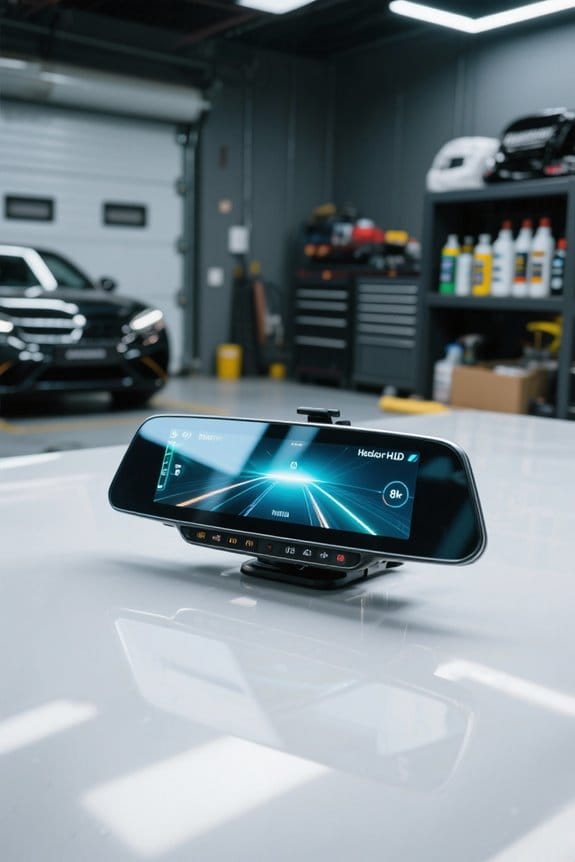
HUD Readability: Brightness, Reflection, And Glass Coatings

HUD readability hinges on brightness, reflection, and glass coatings. Brightness needs to be high, often between 1,000 and 15,000 cd/m². Consistent brightness helps avoid eye strain, aiming for about 70% uniformity. Reflection can obscure visibility, so using anti-glare coatings and polarized films is key. Advanced glass coatings enhance durability while minimizing glare. Together, these factors create clearer, more comfortable displays. Let’s explore how these elements work together to improve your driving experience.
Key Takeaways
- Brightness levels for HUDs should range from 1,000 to 15,000 cd/m² to ensure visibility in varying lighting conditions.
- Reflection mitigation strategies, like using polarizing films, enhance HUD visibility by reducing glare and improving clarity.
- Luminance uniformity around 70% is essential for optimal comfort and stable contrast in HUD displays.
- Advanced coatings, such as UV resistant and anti-chatter treatments, enhance durability and minimize glare on HUD surfaces.
- High efficiency technologies, like MicroLED, reduce power consumption while maintaining sufficient brightness for driver awareness.
Understanding Brightness Levels in HUDs
You may be interested
When discussing brightness levels in head-up displays (HUDs), it’s vital to grasp a few key concepts. Brightness is essential for clear visibility. A HUD must produce sufficient brightness to stand out against ambient light. This can range from 1,800 to over 15,000 candelas per square meter (cd/m²), depending on conditions. For example, automotive HUDs often need tens of thousands of cd/m² to compete with bright daylight. Elements like the combiner glass affect how much light reaches the user. If the display isn’t bright enough, readability suffers, causing eye strain. Manufacturers must balance brightness with power efficiency to guarantee comfort and practicality, making certain users can see what matters most without discomfort. A multi-layer filtration system, much like those used in car air purifiers, enhances visibility by reducing glare and reflection on the combiner glass.
The Importance of Brightness Uniformity
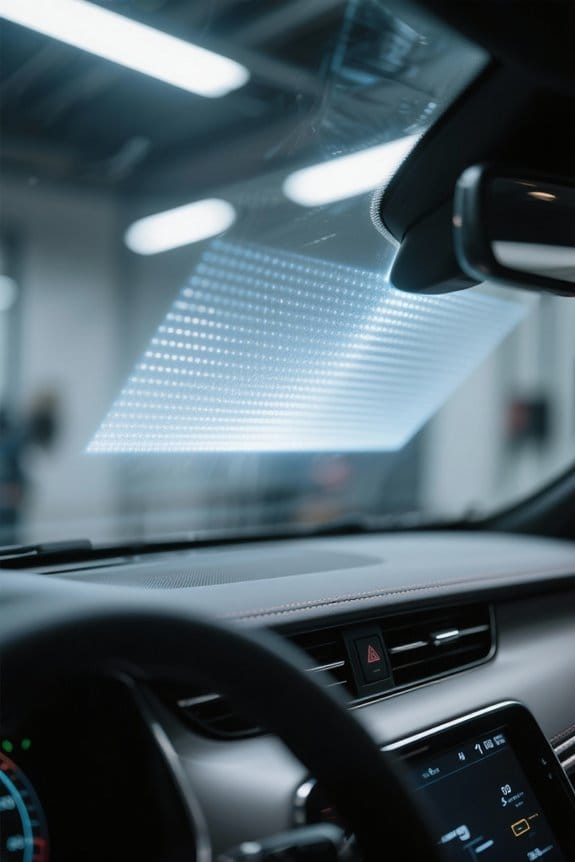
Brightness uniformity holds an essential role in the effectiveness of head-up displays (HUDs). A consistent brightness distribution across the entire eyebox area guarantees that drivers can easily read HUD elements. Without uniformity, regions may appear too bright or too dim, making critical information hard to distinguish. This variability can lead to eye strain, especially during dynamic driving situations. Maintaining around 70% luminance uniformity is key, but higher levels are even better. This improvement promotes eye comfort and enhances safety on the road. Stable contrast ratios are equally important, helping clarity in different lighting conditions, from bright sunlight to nighttime driving. Regular use of battery post cleaners and maintenance products is essential for prolonging battery life and ensuring reliable vehicle performance.
Measuring Brightness in Automotive HUDs
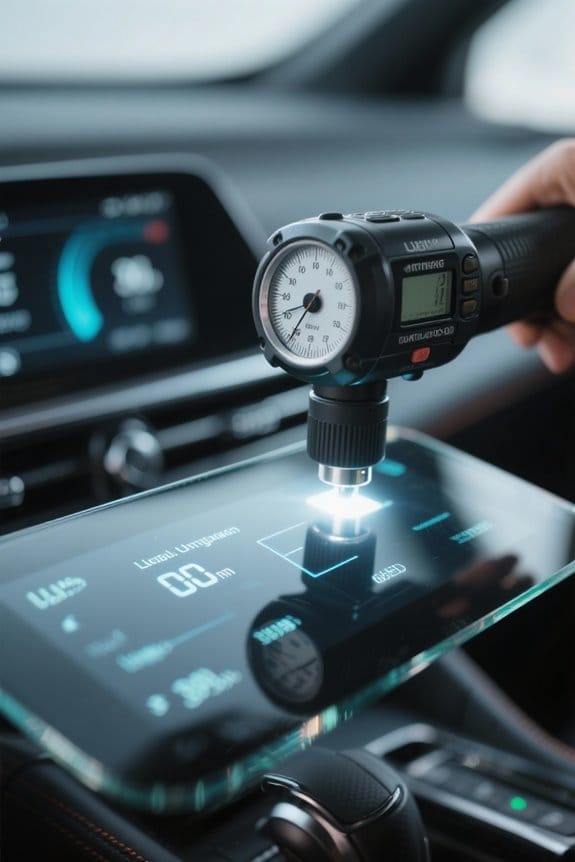
Measuring the brightness of automotive head-up displays (HUDs) involves more than just checking a single number. Proper brightness measurement requires specialized instruments, like luminance meters or imaging colorimeters, which measure in candelas per square meter, known as “nits”. High-resolution imaging photometers can assess brightness uniformity and detect defects across the HUD image. Importantly, instrument calibration is critical; it must be traceable to national standards, like those from NIST. Measurement positions are chosen to simulate different viewing angles, adhering to standards like SAE J1757-2. This thorough approach guarantees accuracy and reliability. Automotive HUDs typically aim for brightness levels between 1000 and 15,000 cd/m², guaranteeing peak visibility for drivers. Additionally, the use of pure sine wave inverters can optimize power sources for HUDs, ensuring clean and efficient energy supply to maintain consistent brightness levels.
The Effect of Ambient Light on HUD Visibility
Ambient light plays an essential role in the visibility of head-up displays (HUDs) in vehicles. Daytime brings bright conditions that can lower the contrast between HUD information and the surrounding environment. This makes reading HUD content more challenging. However, at night, lower light levels improve contrast, resulting in better visibility.
Key insights include:
- Red displays excel in low light, often standing out most at night.
- Ambient light adjustments enhance readability, making it imperative for HUD design.
- Higher ambient contrast ratios improve recognition of HUD details, particularly at night.
- Some dash cams feature superior night vision capabilities that ensure clear recordings during low-light scenarios, which is crucial for maintaining safety and clarity.
Overcoming Reflection Challenges
Although reflections can be a persistent problem for head-up displays (HUDs), several simple strategies can help reduce glare and improve visibility. One effective approach is using reflection techniques around the HUD frame. Glare often originates from plastic frames. By applying thin, self-adhesive black foam sheets, owners can tape a non-reflective barrier inside the frame. This low-cost fix, typically around $5, is nearly invisible and quite effective. Additionally, reflective polarizing films on HUD lenses can manage glare while keeping the display clear. These films reduce internal temperature and block unwanted reflections. For projects involving vehicles, using strong adhesives like 3M automotive tapes ensures that any modifications or enhancements remain secure and effective. Every small adjustment can make a significant difference in driving comfort. By combining these strategies, drivers can conquer reflection challenges and enjoy clearer HUD readings.
Recommended Products

2-Pack HUD Replacement Film: Includes two 6.3 x 4.7 in clear PET sheets that create a defined reflection area on the windshield for add-on head up displays, GPS speedometers and phone HUD-mode projections; this is reflective film, not an electronic display

Universal Fit for Multiple Devices: This versatile reflective screen is suitable for vehicles of all types, including cars, trucks, and RVs, and supports most 3-5 inch HUD units, GPS speedometers, and smartphone projection devices, offering wide compatibility for various driving setups and needs
The Role of Anti-Reflective Coatings
Anti-reflective coatings play an essential role in enhancing the visibility of head-up displays (HUDs). These coatings reduce surface reflections by using multiple ultra-thin layers. This process, known as destructive interference, allows more light to pass through the glass, leading to brighter and clearer images. The anti-reflective benefits include reduced glare, improved contrast, and enhanced reading clarity. For example, drivers can see important information quickly without distracting reflections. Advanced coating technologies, like multi-layer dielectric coatings, are engineered for high brightness and clear visibility, even in bright sunlight. Some all-purpose car cleaners are formulated to maintain the clarity of these coatings, ensuring optimal performance and longevity of HUDs in vehicles.
Recommended Products
MAX Optics provide precise vision from all angles. Innovative lens-frame design adds ventilation both above the nose bridge and on the top of the frame to help reduce fogging.

99 Percent Effective UV Protection: This windshield sun shade umbrella features an advanced 5-layer nano ice-crystal coating that blocks 99 percent of harmful UV rays. It effectively reduces your Ford F150 interior temperature and protects the dashboard and seats from fading and cracking under hot sun exposure
![REEVAA Upgraded Car Windshield Cover for Ice & Snow [All-Weather Protection] Magnetic Fit Weatherproof Frost Cover, Car Winter Accessories, Fit for Trucks, Full-Size SUVs](https://m.media-amazon.com/images/I/41mQ-FCfrNL._SL500_.jpg)
[Clear of Snow in No Time] Forget the snow scraper! Simply drape the REEVAA windshield cover for ice and snow before a snowfall or frost, and your windshield stays ice-free. With one quick lift, the snow falls away — no more scraping or mess. Save precious time on busy winter mornings and start your day hassle-free
Optical Bonding and Its Benefits
Optical bonding is a game-changer in display technology, especially for head-up displays (HUDs). By eliminating the air gap between the cover glass and LCD, it uses transparent adhesive instead. This vital innovation provides several optical bonding advantages. For instance, brightness improves by about 10%, making images clearer.
Display durability also sees a boost. Impact resistance increases by 20%, enhancing structural integrity. Bonded displays withstand shocks and vibrations better, ideal for tough environments. They repel dust and moisture, reducing the risk of fogging over time.
Additionally, color accuracy and contrast improve, making everything look more vivid. These benefits are essential for HUDs, where clarity under various lighting conditions is necessary. Overall, optical bonding enhances user experience markedly. Moreover, engine bay dressings with UV protection contribute to the longevity and aesthetics of vehicle components, paralleling the durability enhancements in bonded displays.
Addressing Readability in Bright Conditions
Readability in bright conditions is an essential factor in the effectiveness of head-up displays (HUDs). For ideal visibility, HUDs need brightness levels exceeding 800-1000 nits, especially in direct sunlight. Many aftermarket models fall short with only 300 nits, making them difficult to read. Key strategies include: – Color contrast: High contrast between text and background enhances clarity. Dark backgrounds work best. – Display design: Anti-reflective coatings greatly reduce glare, improving readability. Adaptive brightness can also adjust settings based on ambient light. However, increasing brightness may reduce contrast at night. It’s all about finding the right balance to guarantee safety and effectiveness in various lighting conditions.
Recommended Products
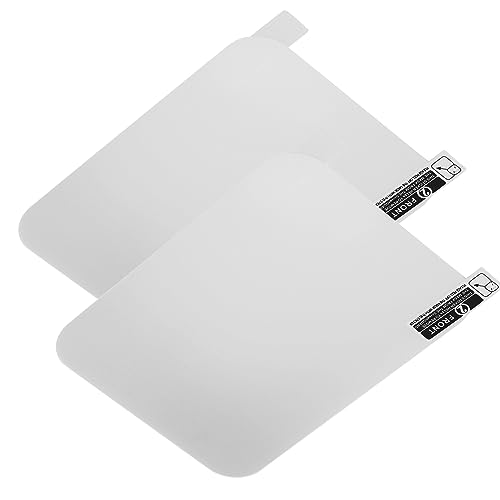
Car HUD Head Up Display Reflective Film provides the best display resolution and pixels per inch (ppi) to best reflect the projection of speedometer, tachometer, or navigation from your HUD unit or your smartphone. This HUD film will work well anytime throughout the day, whether that be day or night.

Dual System OBD and GPS: Providing the most accurate driving feedback through synchronized OBD and GPS data.High definition display screen, multiple UIs can switch between different images, interface numbers and colors can be freely adjusted, and a single interface can display up to 16 types of data.Works with OBD2-compatible cars (2008 and newer, EU/US standards) and GPS mode (universal for all vehicles)
PRODUCT USAGE:Special for car HUD head up display. This HUD transparent reflective film with high definition,not only improve the brightness on the car windshield,but also eliminate double images. And it never distract your driving vision,brings you perfect safe driving.
Key Standards for HUD Performance Testing
Effective HUD performance testing involves several key standards that assure compliance and functionality. These include thorough inspection standards focused on physical conditions. Properties under HUD contracts must pass strict inspections, scoring above 60 to avoid violations. HUD performance evaluation relies on these inspections to guarantee safety and compliance. For instance, if deficiencies arise, property owners must quickly address Exigent Health and Safety issues. Regular on-site assessments are essential, occurring every 24 months or more frequently if needed. Regular replacement of engine air filters, such as ECOGARD Premium filters, is crucial for maintaining engine health and performance.
Energy Efficiency in High Brightness HUDs
High brightness heads-up displays (HUDs) present unique challenges and exciting opportunities for energy efficiency. To meet brightness needs of up to 10,000 cd/m², these displays often consume substantial power. However, innovative energy saving technologies are changing the game. For instance, microLED technology can achieve five times the efficiency of traditional methods. This means that fewer LEDs are needed, helping to manage heat and save energy. Optical designs also play a significant role, directing light precisely where it’s needed. Additionally, the integration of sustainable materials can further enhance energy efficiency while reducing environmental impact. With these advancements, high brightness HUDs are not just brighter, but smarter and more sustainable too. A similar focus on safety mechanisms is evident in portable jump starters, ensuring user protection and enhancing product reliability.
Innovations in HUD Design and Coating Technologies
Innovations in HUD design and coating technologies are transforming how drivers interact with essential information on the road. Advanced film enhancements, like Covestro’s Makrofol series, offer high optical clarity vital for automotive settings. Coating innovations guarantee durability by adhering to strict automotive standards. These advancements support driver safety through enhanced visibility and reduced glare.
Augmented reality (AR) applications now overlay important navigational data directly onto the windshield, keeping drivers informed without distraction. Modular designs and advanced sensors facilitate seamless automotive integration.
Key benefits include:
- UV resistance for prolonged clarity
- Anti-chatter treatments for a noise-free display
- Variable transparency glass for glare reduction
Such technologies are paving the way for more efficient and intuitive driving experiences.
Recommended Products

Durable & Scratch-Resistant Material: Crafted from high-quality transparent film, these dash cam mounting pads protect your windshield and HUD screen from scratches while offering a clear, high-resolution display for better visibility and stable camera positioning

Easy Application & Reusability: The 4-pack of reflective films allows simple installation without water or glue. Clean the windshield, remove the back protective film, and apply the clear electrostatic film. It can be reused by washing, ensuring long-lasting protection

Package included: 2x Windshield Sun Strip, 1x Spatula
Frequently Asked Questions
How Do Different Colors Affect HUD Visibility and Readability?
Color contrast considerably impacts HUD visibility, with higher contrast enhancing visibility more effectively. Certain colors, like red and blue, reduce visibility enhancement, while others, such as yellow, positively contribute to readability and overall cognitive efficiency.
What Types of Materials Are Used for HUD Combiners?
HUD combiners utilize a variety of materials, including composite materials for structural integrity and optical plastics for clarity. These components enhance durability while optimizing visual performance in automotive and avionics applications.
Can HUDS Be Customized for Specific Driver Preferences?
Head-Up Displays can indeed be customized for specific driver preferences. Users can adjust display settings, selecting which data appears and its arrangement, thereby enhancing their driving experience by emphasizing critical information and reducing unnecessary clutter.
How Does HUD Technology Integrate With Advanced Driver-Assistance Systems?
HUD technology integrates with advanced driver-assistance systems through seamless sensor integration and system compatibility, projecting essential alerts into the driver’s line of sight like whispers of insight from the vehicle, enhancing both safety and situational awareness.
What Is the Lifespan of Anti-Reflective Coatings on HUDS?
Anti-reflective coatings on HUDs typically last one to two years, with coating durability influenced by environmental exposure and maintenance practices. Proper cleaning methods and protection from harsh conditions can greatly enhance their lifespan.