As an Amazon Associate, we earn from qualifying purchases. Some links on this site are affiliate links at no extra cost to you. Our recommendations are based on thorough research and editorial judgment.

Managing 12V Loads: Chargers, Splitters, And Inverter Basics

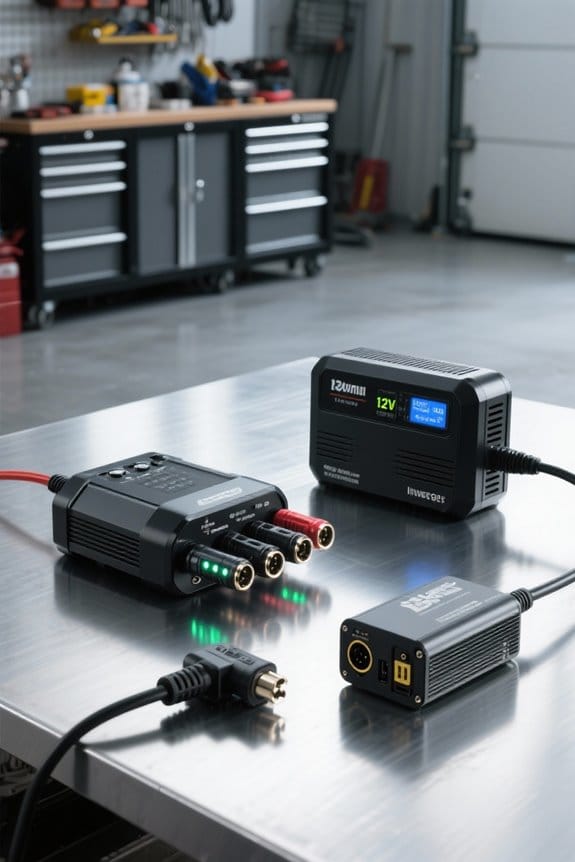
Managing 12V loads involves understanding chargers, splitters, and inverters. Different chargers like manual, solar, and trickle chargers can help maintain battery health. Battery isolators separate multiple batteries to prevent draining the main one. Meanwhile, inverters convert DC power from batteries to AC for devices. Make sure to match the inverter’s power rating to your needs, ideally with pure sine wave options for sensitive electronics. Get ready to explore more about optimizing your 12V system efficiently!
Key Takeaways
- Use smart chargers compatible with your battery type to enhance efficiency and prevent over-discharge.
- Implement battery isolators to safely charge multiple batteries without cross-drain risks to the main battery.
- Choose inverters with a power rating that matches the total wattage of your appliances for reliable performance.
- Regularly monitor system voltage to maintain a stable range and ensure proper functioning of connected devices.
- Schedule routine system checks and maintenance to avoid corrosion, overheating, and ensure overall safety of your 12V setup.
Understanding 12V Charger Types and Functions
You may be interested
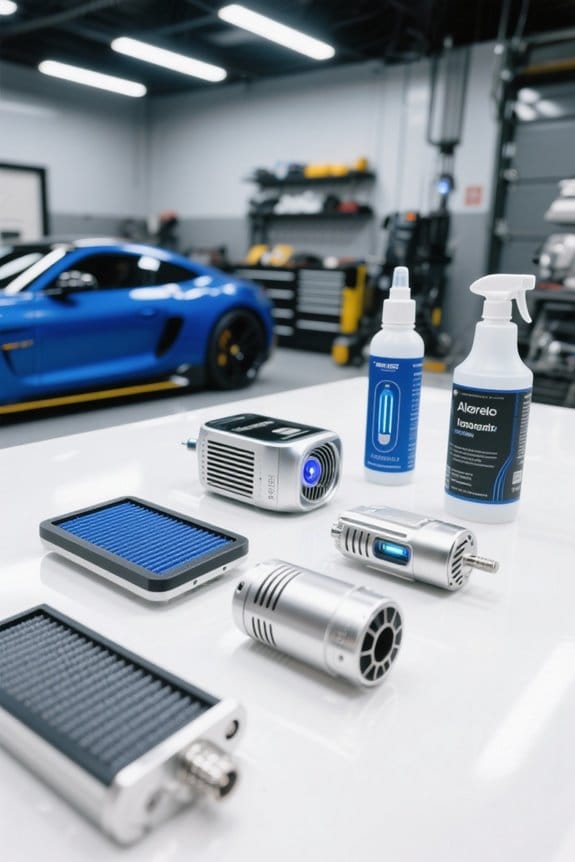
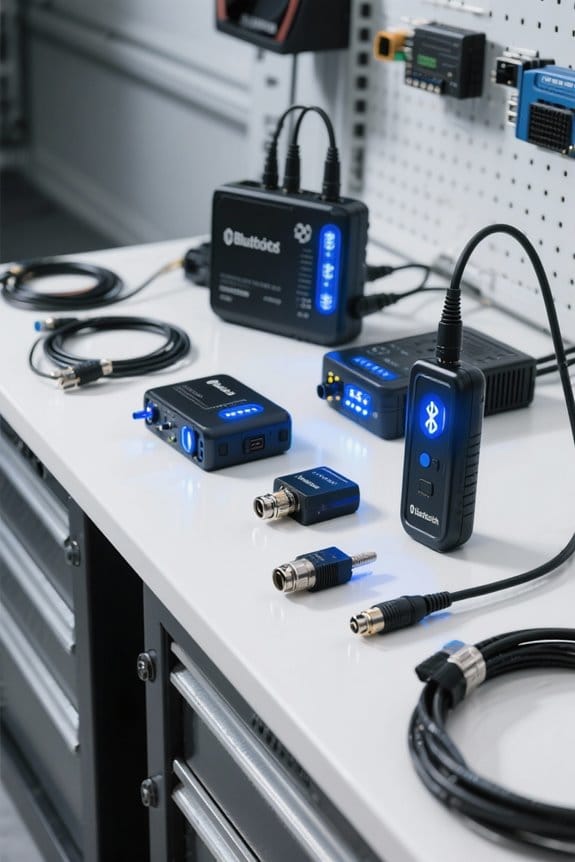

Have you ever wondered which 12V battery charger is right for you? Understanding your options can help you make the best choice. Manual chargers require your attention for every charge, which can be tedious. In contrast, solar chargers harness sunlight, ideal for off-grid situations, but often need a charge controller to prevent overcharging. Trickle charging is perfect for maintaining battery health over time, though it’s wise to monitor them closely to avoid overcharging. For older batteries, desulfation technology can work wonders. It breaks down sulfate crystals that can hamper performance. Each type of charger serves different needs, whether for automotive, marine, or powering small devices. Choose the right one based on your specific situation! When considering additional features, some battery chargers also come with built-in safety technologies that ensure secure operation during use.
Exploring Battery Splitters and Isolators
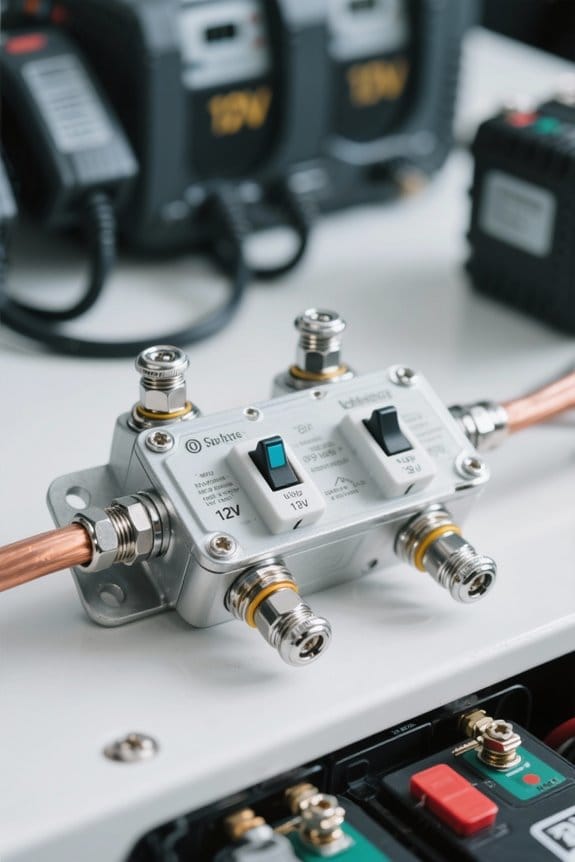
After exploring different types of 12V chargers, the next step is to understand battery splitters and isolators. These devices manage multiple battery types effectively. Battery isolators allow charging of several batteries without direct electrical connection, protecting the main battery from auxiliary drains. This means you can run multiple loads without risking a dead starting battery.
On the other hand, battery separators prioritize charging. They allow your main battery to charge first before trickling power to the others. Both devices streamline wiring setups, with isolators requiring more complex configurations but offering better protection against battery drain. In contrast, separators simplify connections but may permit some cross-drain. Evaluating your needs will help determine the right choice for your setup. For effective management, consider using a Bluetooth-enabled battery monitor to track real-time charging status and ensure optimal performance.
Basics of 12V Inverters

Understanding the basics of 12V inverters is vital for anyone looking to power AC devices from a 12V battery source. These inverters convert direct current (DC) from batteries into alternating current (AC), making it possible to use home appliances where traditional power isn’t available. When considering inverter installation, it’s important to match the inverter’s power rating to your needs. If your total devices use 940W, opt for at least a 1.5 kVA inverter. A variety of safety features and protection are crucial for ensuring reliable and secure inverter operation. For effective inverter maintenance, regularly check for overheating and guarantee the cooling system works well. Remember, choosing a pure sine wave inverter may be best for sensitive electronics. This small investment can prevent operational issues and enhance the lifespan of your devices.
Principles of 12V Load Management
Load management in a 12V system is all about balancing power use effectively. Prioritizing safety-critical systems guarantees indispensable functions, like brakes and engine control, receive power first. This is imperative, especially when battery levels drop. Load shedding plays a key role in managing non-essential devices, like seat warmers or audio systems, during peak demand. By temporarily shutting these off, more energy stays focused on what matters most. Additionally, voltage stability is fundamental. A stable voltage range of 13.2V to 14.4V maintains functionality and protects sensitive electronics. Continuous monitoring adjusts power distribution in real-time, reacting to any changes in demand or environmental factors. This adaptability keeps the system running smoothly, enhancing overall reliability and performance. For travelers, ensuring device safety during travel is crucial, and using adapters with high surge protection ratings can prevent damage from electrical spikes.
Ensuring 12V System Efficiency and Safety
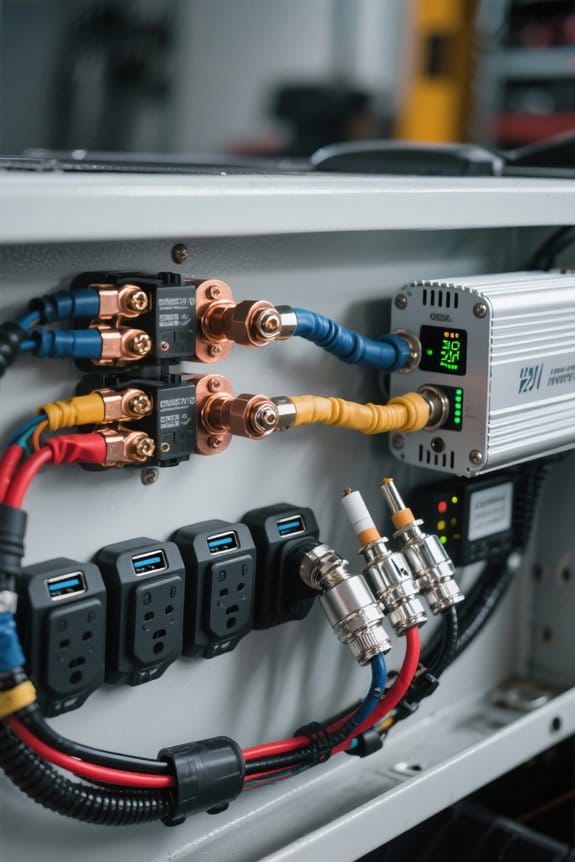
Guaranteeing efficiency and safety in a 12V system is crucial for reliable performance. Proper battery care is important to maintain voltage stability and extend battery life. Begin by accurately evaluating your power needs. Sum the wattage of all devices, and determine your daily amp-hour requirements. Choose a battery with the right amp-hour rating to support this demand. Use smart chargers tailored for your battery type to enhance performance. Regularly monitor the state of charge to prevent over-discharge. Make certain wire sizes match the load to avoid unnecessary voltage drop. Also, create a neat wiring layout. This makes maintenance easier and improves safety. Strong adhesives used in automotive tapes, like those from 3M, are essential in securely attaching components to maintain system integrity. Monitor your system consistently, checking connections and cleaning terminals to prevent corrosion. These steps guarantee an efficient and safe 12V system.
Frequently Asked Questions
How Do I Choose the Right Charger for My Battery Type?
To choose the right charger for a battery type, one must consider its battery chemistry and match it to charger specifications. Selecting chargers designed for specific chemistries guarantees safe charging and optimizes battery longevity and performance.
Can I Use Multiple Inverters on the Same Battery System?
Yes, multiple inverters can be used on the same battery system, provided inverter capacity matches the total load. Effective load management is essential to guarantee balanced power distribution and prevent system overload or damage.
What Are Signs of a Failing 12V Battery?
Signs of a failing 12V battery include bulging cases, slow cranking, and frequent jump starts. Regular maintenance and preservation techniques can help extend battery life, reducing the likelihood of encountering these failures.
How Long Does It Take to Fully Charge a 12V Battery?
Charging a 12V battery can be a drawn-out affair, often requiring 10 hours, depending on battery capacity and charging efficiency. Variables like temperature and battery health can extend this time beyond simple calculations.
Do 12V Systems Require Regular Maintenance?
Yes, 12V systems require regular maintenance. Routine battery inspection guarantees peak performance, checking voltage levels, terminal integrity, and electrolyte levels. Regular adherence to 12V maintenance practices prolongs battery life and enhances overall system reliability.