As an Amazon Associate, we earn from qualifying purchases. Some links on this site are affiliate links at no extra cost to you. Our recommendations are based on thorough research and editorial judgment.

Preventing Dye Transfer On Light Leather Seats

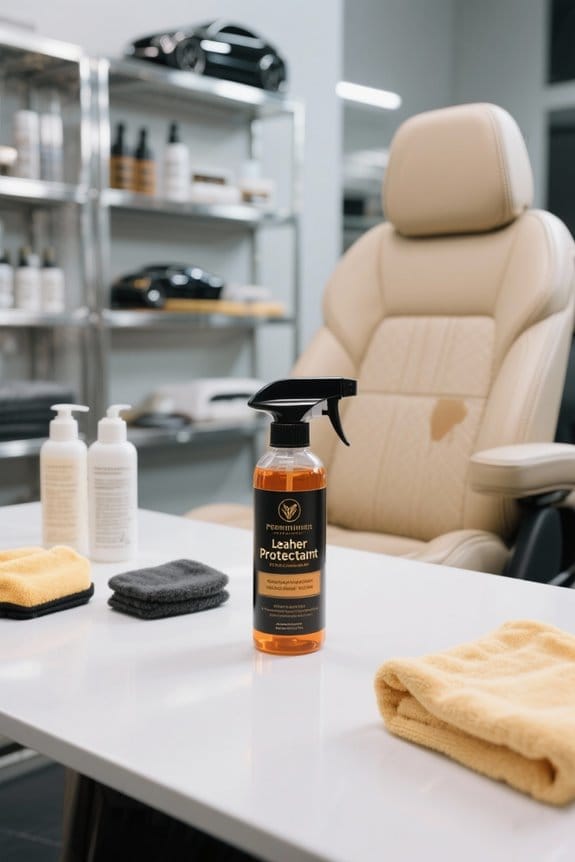
To prevent dye transfer on light leather seats, start by applying a protective leather coating. These products create a barrier against stains and keep your leather looking fresh. Regularly cleaning with specialized leather cleaners can help remove any stains that do occur. Additionally, consider using seat covers in contrasting colors for extra protection. Regular maintenance is key; reapply coatings every three to six months for best results. Find out more about effective cleaning methods and practices to minimize risks.
Key Takeaways
- Apply water-based or fluorocarbon-based protective coatings to create a barrier against dye transfer on light leather seats.
- Use seat covers in contrasting colors to provide added protection from dye leaching.
- Regularly inspect for early signs of dye spots to address them promptly.
- Clean and condition leather seats every six months to maintain protective layers.
- Reapply protective coatings every three to six months for long-lasting effectiveness against stains.
Understanding the Causes of Dye Transfer
You may be interested
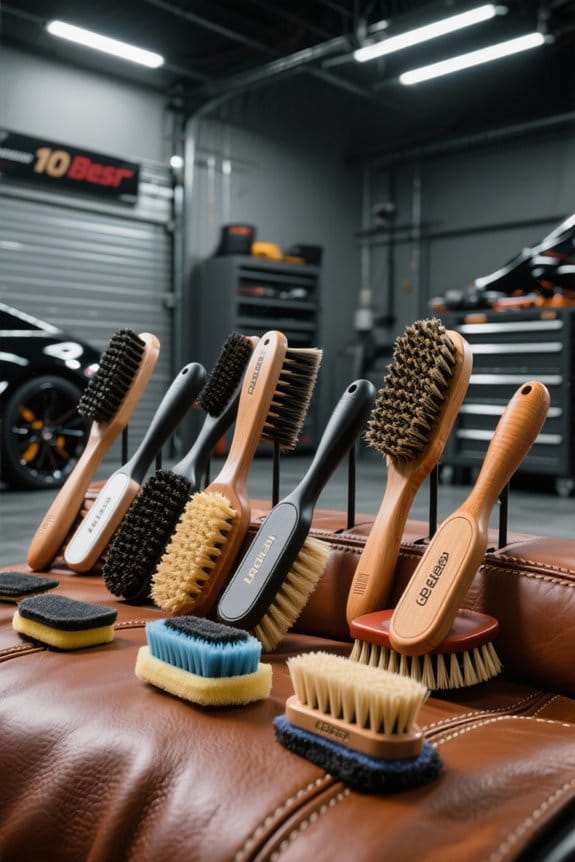
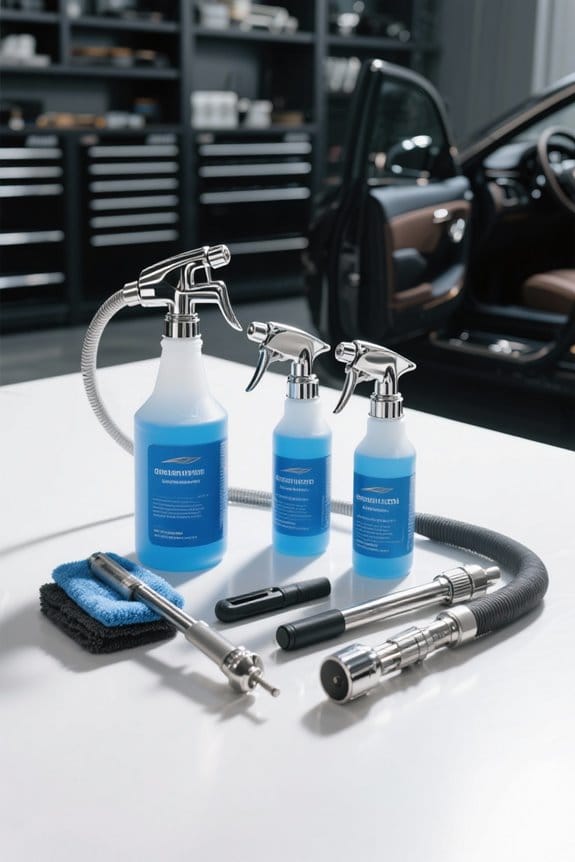
When it comes to light leather seats, understanding dye transfer is essential. This process often begins with the dye origin, particularly from dark fabrics like denim. Indigo dye, prevalent in new or unwashed jeans, can leach onto your seats due to body heat and friction. The porous nature of leather allows these dye molecules to penetrate its surface. Several factors increase the risk of dye transfer. For instance, higher body temperature and moisture from sweat can accelerate fabric reactions. Repeated movement while seated creates friction, promoting further transfer. Lighter leather, like cream or beige, shows these stains more prominently. Even coated leather isn’t fully protected. Being informed helps you take proactive steps to preserve your seats. If you are a pet owner, consider using specialized dog hair removal tools to maintain the cleanliness of your vehicle’s upholstery and avoid exacerbating dye transfer issues with embedded fur.
Recommended Leather Coating and Sealant Products

Understanding how to protect light leather seats from dye transfer leads naturally into exploring recommended leather coating and sealant products. Proper coating technologies can make a significant difference.
- Water-Based Clear Protective Coatings: Products like Luxury Leather Repair’s Anti-Dye Transfer Top Coat prevent dye absorption, restoring softness and durability.
- Fluorocarbon-Based Leather Protectors: Leather Masters Protection Cream effectively blocks dye transfer and extends the leather’s life.
- Leather Sealants and Conditioners: These reduce dye transfer by providing a protective overlay while maintaining softness.
- Ceramic-Based Protectants: CQuartz Leather Protector offers a durable, hydrophobic layer that resists stains.
Choosing the right sealant applications safeguards your light leather, keeping it looking fresh and new. Regular maintenance guarantees long-lasting benefits. Additionally, products like Chemical Guys Sprayable Leather Cleaner and Conditioner are effective in cleaning, conditioning, and protecting leather, ensuring it remains in excellent condition.
Effective Cleaning Methods for Dye-Transfer Removal
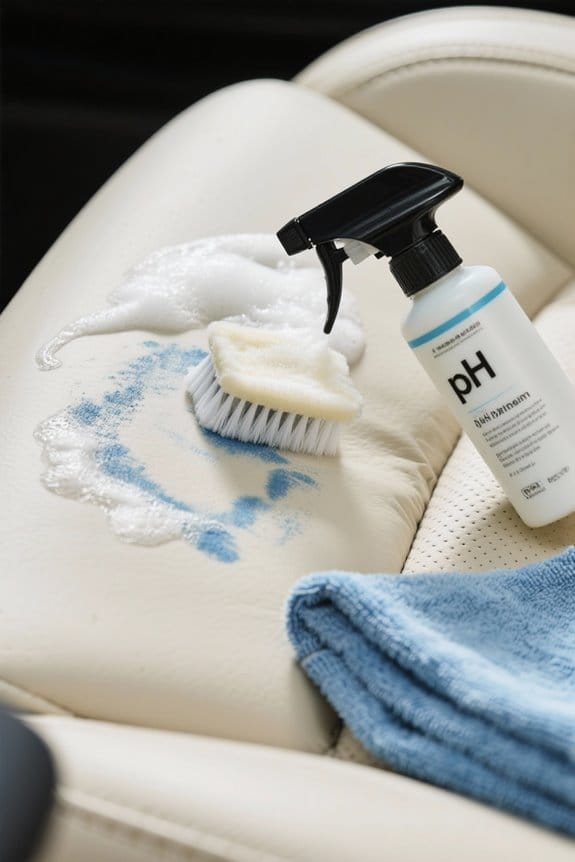
Removing dye transfer from light leather seats can be a tricky endeavor, but effective methods exist to help tackle this issue. First, specialized leather cleaners, like Leather Master Dye Transfer Cleaner, are essential. They remove stains without damaging the leather.
Next, apply dye-specific stain removers directly to the affected area. Gently rub with a clean microfiber cloth until the dye lifts.
For tougher stains, solvents such as GLD can enhance the cleaning process.
Remember, follow any cleaning protocols with conditioning treatments to restore moisture and suppleness. Consider using the Leather Honey Leather Conditioner for long-lasting protection, as it is highly rated and provides deep rejuvenation for leather items.
Avoid harsh scrubbing tools—soft brushes work best.
Always test chemical treatments on inconspicuous areas first to prevent color changes. With these methods, your seats can look great again!
Preventative Practices to Minimize Risk

To keep light leather seats looking pristine, preventative practices are key. One effective strategy is applying specialized protective leather coatings, like CQuartz Leather. This creates a barrier against dye transfer while preserving the leather’s sheen. Testing products, such as Leather Master Protection Cream, guarantees safety and efficacy. Using seat covers, especially in contrasting colors, provides an additional layer of defense. Faux leather options are practical for those wearing dark denim. Regular inspection helps catch dye spots early. Light cleaning with mild products maintains the protective layer. Remember to come back every three to six months for reapplication of coatings. For effective residue removal on car interiors, consider using non-abrasive formulas that protect surfaces while tackling sticky messes.
Maintenance Frequency and Care Requirements
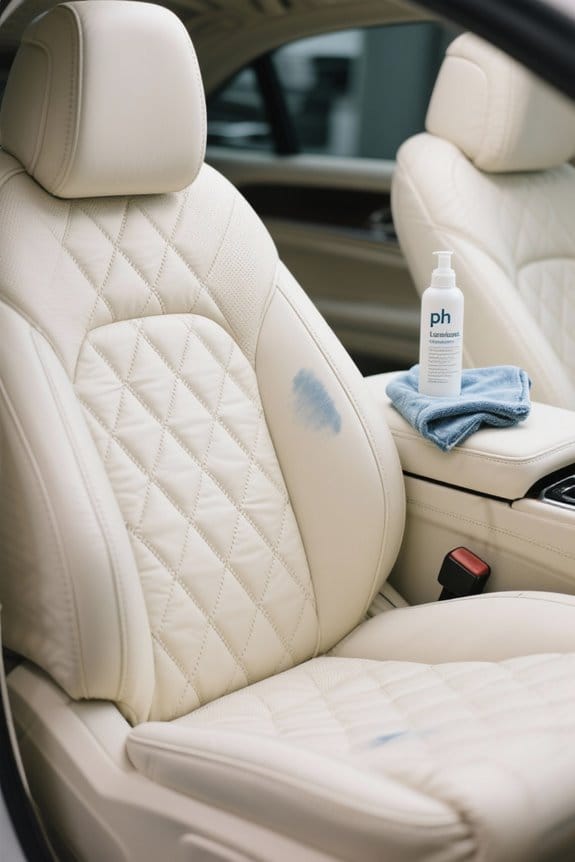
How often should light leather seats be cleaned and conditioned? Regular upkeep is key. It’s recommended to follow a cleaning schedule every six months. This routine helps prevent dirt buildup and cracking. For high-contact areas like bolsters, a quick wipe with a microfiber cloth can be done more frequently.
Conditioning intervals align nicely with cleaning sessions. After each cleaning, apply conditioner to restore leather’s natural oils. This prevents wear and fading from sunlight. However, don’t over-condition; use just enough when necessary.
Quickly deal with spills to prevent stains. Also, consider professional detailing occasionally for extra care. By staying proactive, you can keep your seats looking great and reduce the risk of dye transfer from clothing. Furthermore, using non-toxic solutions for cleaning and conditioning can ensure a safer environment for both your leather and health.
Frequently Asked Questions
Can I Use Regular Fabric Protectants on Leather Seats?
While regular fabric protectants may promise protection, they lack the finesse needed for leather. Their effectiveness is diminished, risking damage; consequently, leather care products specifically formulated are essential for preserving the elegance and longevity of leather surfaces.
How Do I Know if My Jeans Bleed Color?
To determine if jeans bleed color, perform jean colorfastness testing by rubbing a white cloth on the fabric. If dye transfers, it indicates potential dye transfer prevention measures should be taken to avoid staining surfaces.
Are There Specific Jeans Brands That Are Safer for Light Leather?
Certain jeans brands utilize materials that pass colorfastness tests, indicating reduced dye transfer risk. Pre-washed jeans and those labeled “non-transfer” are typically safer, minimizing the likelihood of staining light leather surfaces during regular wear.
Can Sunlight Exposure Affect Dye Transfer on Leather?
Sunlight exposure greatly affects dye transfer on leather. Prolonged exposure weakens the leather’s surface, increasing susceptibility to dye absorption. Implementing leather UV protection can mitigate this risk, preserving color integrity and resistance to transfer.
Is It Safe to Dye Leather to Match My Jeans?
Dyeing leather to match jeans can be a transformative journey, but caution is essential. Using proper leather dyeing techniques is vital, as colorfast denim may still lead to potential mismatches and dye transfer complications.