As an Amazon Associate, we earn from qualifying purchases. Some links on this site are affiliate links at no extra cost to you. Our recommendations are based on thorough research and editorial judgment.

Safe Jack Points And Fender Protection During Detailing

Understanding safe jack points and fender protection is essential for vehicle care. Always use designated jack points like pinch welds for sedans and frame rails for trucks. Protect your fenders during detailing with soft fender covers to avoid scratches. Cleaning with mild soap will keep surfaces smooth. Consider ceramic coatings for added protection against UV rays and contaminants. Following these steps guarantees your car stays safe and looking great. There’s more to explore on maintaining your vehicle!
Key Takeaways
- Always consult your vehicle manual for manufacturer-specified jack points to ensure safe lifting without causing damage.
- Use pinch welds for sedans and hatchbacks, and frame rails for trucks to achieve maximum stability during jacking.
- Employ fender covers to protect against scratches and dirt during the detailing process.
- Clean fenders with mild soaps and soft sponges before applying protective coatings to maintain their finish.
- Regularly inspect and reapply ceramic or hydrophobic coatings to preserve fender condition and repel contaminants.
Understanding Jack Points for Different Vehicle Types
You may be interested

When it comes to safely lifting vehicles, knowing where to find the jack points is important. Different vehicle types have specific spots to guarantee jack safety. Sedans, and hatchbacks typically have pinch welds just behind the front wheels and in front of the rear wheels. Look for visible indicators like notches or the word “jack.” SUVs and crossovers mirror this design but might have hidden pinch welds under plastic side skirts. Trucks, on the other hand, require lifting from the frame rails for stability. For sports cars with low clearance, specialized jacks may be needed. Always consult your manual for exact locations, especially in electric vehicles where safety around battery systems becomes critical. Knowing these details matters! To prevent surface damage during detailing, consider using Chenille wash mitts which provide a scratch-free shine without harming delicate areas.
Preparing Your Vehicle for Safe Jacking
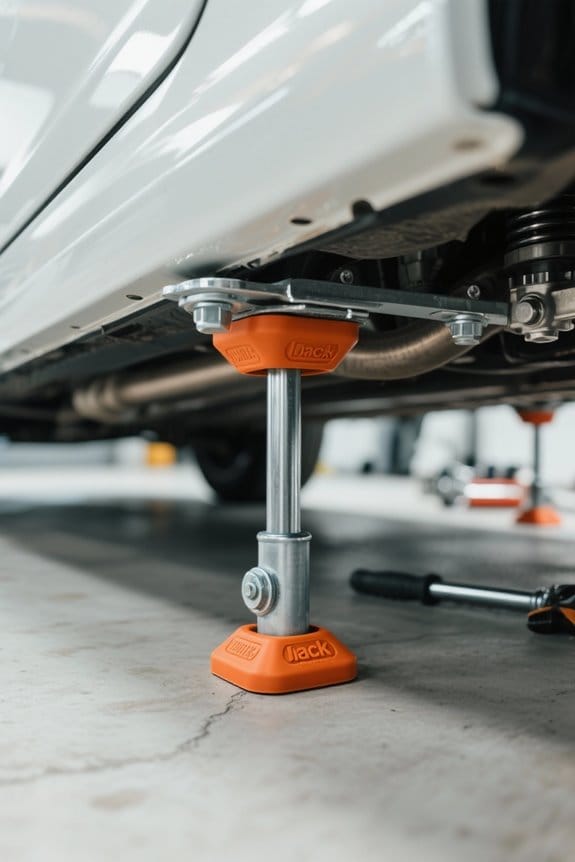
Preparing a vehicle for safe jacking requires attention to several essential details. First, find a flat, hard surface to park the vehicle. Avoid slopes greater than five degrees, as they compromise safety. Always use sturdy chocks to prevent rolling and guarantee the parking brake is engaged. Next, locate the manufacturer’s specified jack points for safe lifting. Before you start, loosen the lug nuts slightly to prevent spinning during jacking. Don’t forget your safety gear! Gloves and safety glasses protect you from injuries during the setup process. Inspect your jack tools to confirm they are functional and fit properly under the vehicle. Following these steps leads to a safer and more efficient jacking process. Consider using a non-slip design liner for added stability while working in the car’s cargo area.
Recommended Products

Heavy-Duty Solid Rubber Construction: Premium-grade molded rubber resists cracking, crushing, deformation, and weather damage for long-lasting stability under vehicle weight

Heavy-Duty Structural Poly Foam Construction – Made from lightweight yet durable poly foam for reliable performance under pressure. Maintains shape and grip without cracking or crumbling.

Built to Last in Any Climate – Made from heavy-duty, weather-resistant rubber, these wheel chocks provide reliable performance in all conditions, from extreme heat to freezing cold.
Techniques for Proper Jacking
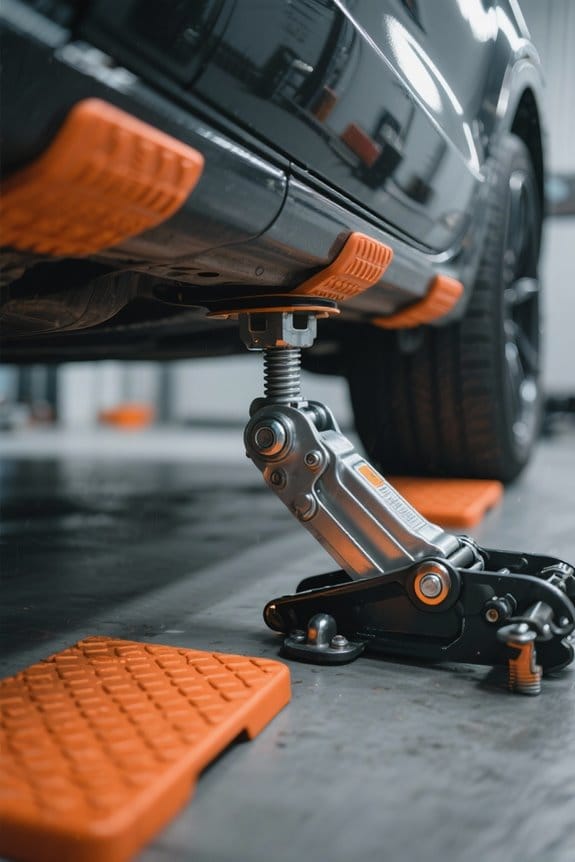
Mastering the techniques for proper jacking is essential for vehicle safety. First, ascertain accurate jack point identification. These are typically located under the rocker panels. Consult your owner’s manual for specific locations. Next, use correct alignment techniques. Center the jack pad directly under the designated jack point to prevent slipping. Use wood or rubber pads to spread the load and protect sensitive areas from damage. Avoid using jacks on painted surfaces or plastic trims; this can cause scratches. Lift gradually and maintain control. After lifting, perform a quick stability check by gently shaking the vehicle. If anything feels unstable, lower it immediately. Following these steps helps minimize risks and guarantees a safer lifting experience. Regular cleaning of your vehicle’s interior with Chemical Guys Total Interior Cleaner not only maintains its appearance but also protects surfaces like leather, vinyl, and plastic without leaving a greasy residue.
Recommended Products

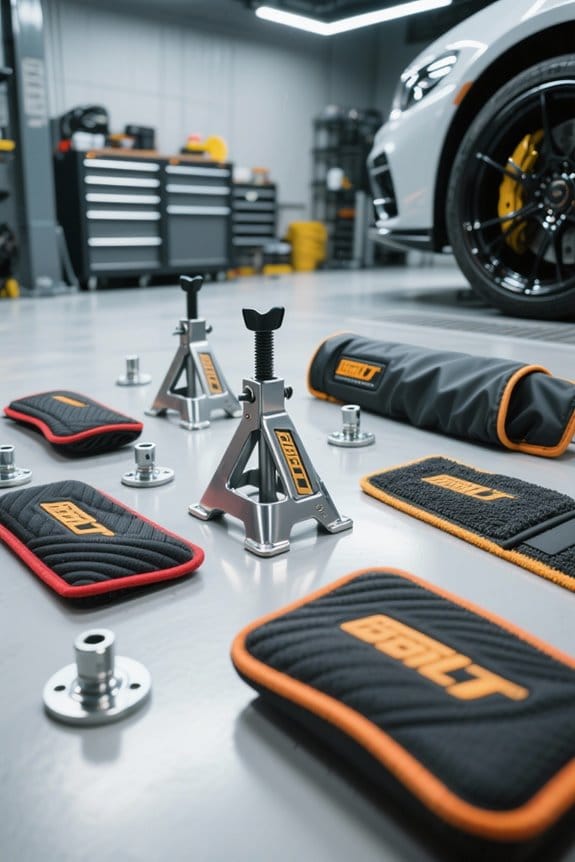
SLOTTED DESIGN: The cross grooove design of floor jack pads is a great protector to align with the side welding seam, prevent your frame rail, specifically pinch welds from bending or scratching

SLOTTED DESIGN: The cross grooove design of floor jack pads is a great protector to align with the side welding seam, prevent your frame rail, specifically pinch welds from bending or scratching

SLOTTED DESIGN: The slotted design of floor jack pads is a great protector to align with the side welding seam, prevent your frame rail, specifically pinch welds from bending or scratching
Utilizing Jack Stands Effectively
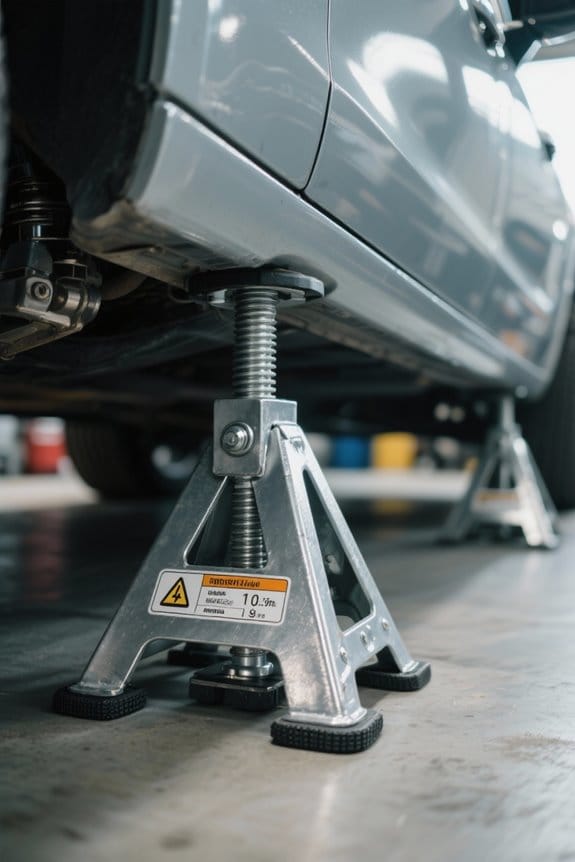
Using jack stands effectively is essential for vehicle safety and stability. First, verify proper jack stand placement by positioning them under the vehicle’s manufacturer-specified jack points. These are usually near the pinch welds. Always place jack stands on a level surface to prevent slipping.
After setting the stands, perform stability verification. Lower the vehicle gently, watching for any shifting. A quick shake can confirm the stands are secure. If there’s any tilting, slightly raise the vehicle and adjust the stands. Remember, using locking pins enhances security.
It is crucial to prioritize models with double safety mechanisms and locking pins when selecting jack stands for enhanced vehicle support. Never compromise on safety; avoid using makeshift supports. Select sturdy jack stands with a higher weight capacity than your vehicle. Your peace of mind is worth confirming everything is stable and secure before any work beneath the car.
Recommended Products

Pair of 3 Ton (2.7 metric Ton) jack stands with 6,000-pound capacity

Handle A Big Load: Are you dealing with tough lifting jobs? VEVOR's jack stands have a 6 ton/13000 lbs loading capacity and can raise SUVs, pickups, cars, UTVs, and ATVs. They conform to CE standards, ensuring your safety during use. Feel confident during vehicle repairs!
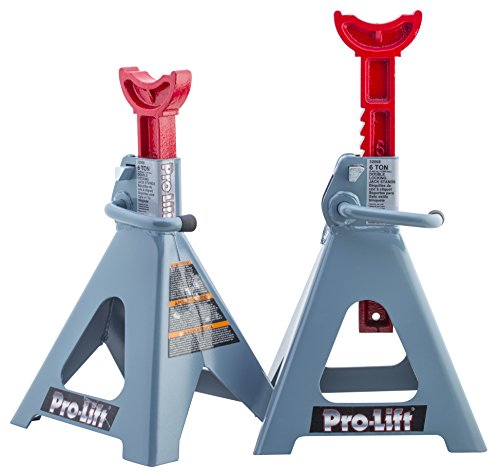
Sturdy stamped Steel Construction with 6 ton capacity
Protecting Your Fender During Detailing
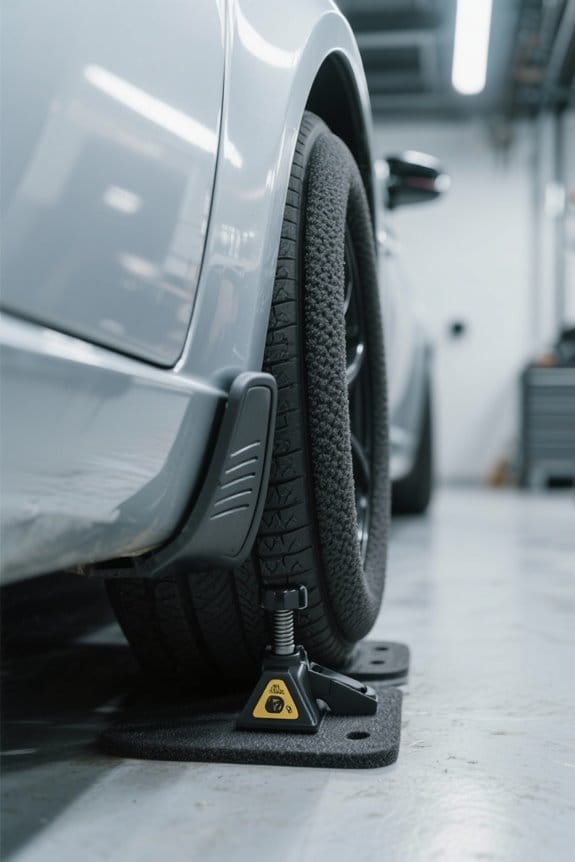
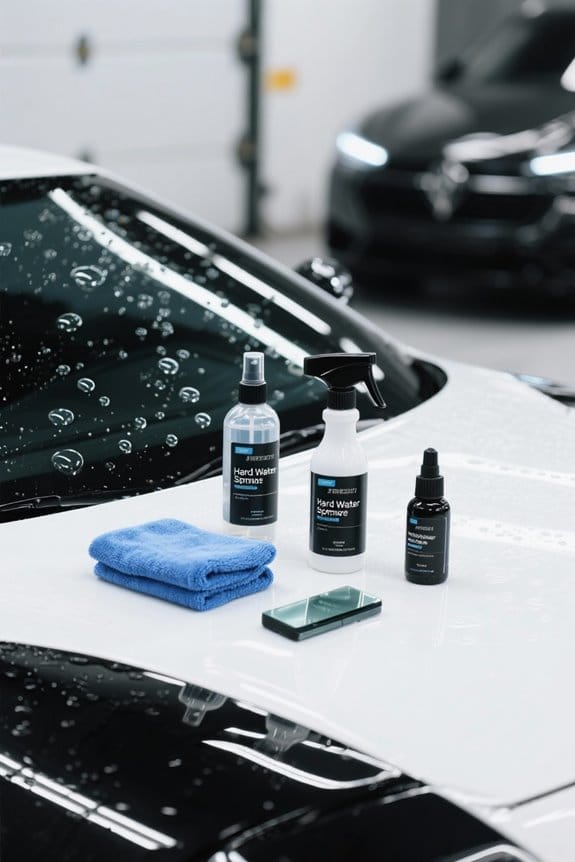
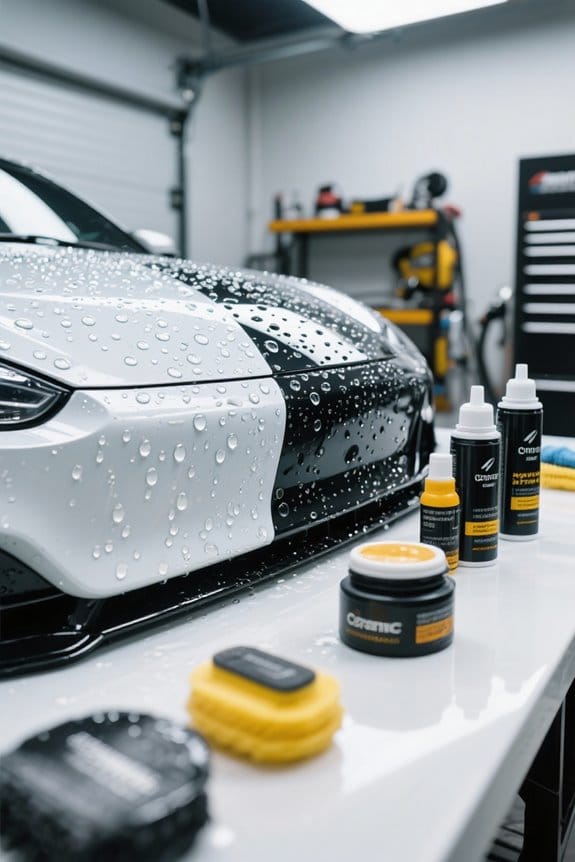
Why is protecting fenders during detailing so important? Fenders are prone to damage from dirt, debris, and tools. Using fender covers is a smart way to prevent scratches. These soft-backed covers shield the paint while you work. It’s also crucial to clean the fenders properly before applying any protective coatings. Mild soaps and soft sponges work best. After cleaning, consider ceramic coatings, which bond with the paint and repel UV rays and contaminants. This helps maintain that dazzling shine. Regularly inspect the coatings for wear to guarantee your fenders remain protected. Adding hydrophobic coatings can also make future clean-ups easier. Protecting fenders is about care, caution, and using the right tools. A compound like the Turtle Wax Hybrid Solutions can offer enhanced protection and shine in a single application.
Recommended Products

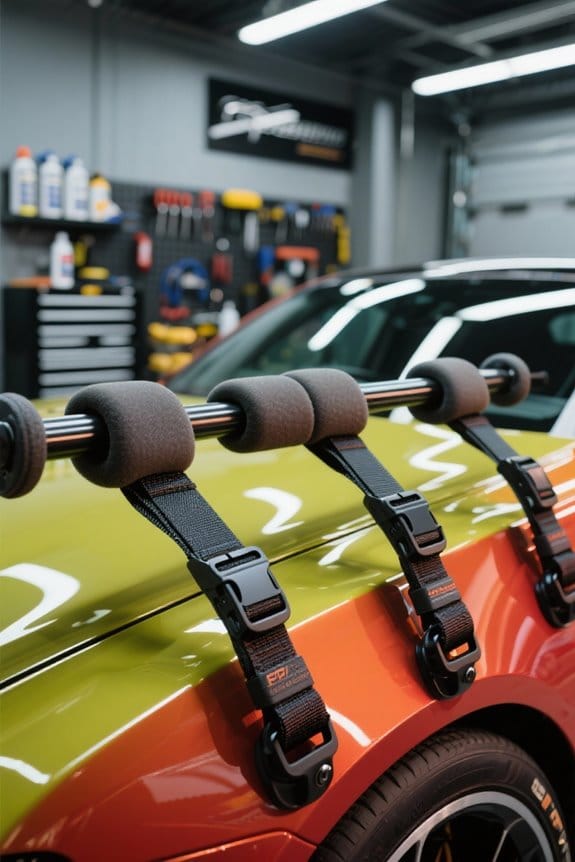
Secure Magnetic Hold: Powerful corner magnets keep the cover in place on any car fender, ensuring it won’t slip during repairs. Ideal for use as a mechanic fender cover protector on cars, trucks, and SUVs.

3-Piece Full Protection: Completely cover the whole front end of your car, so you can move around as needed with no worries
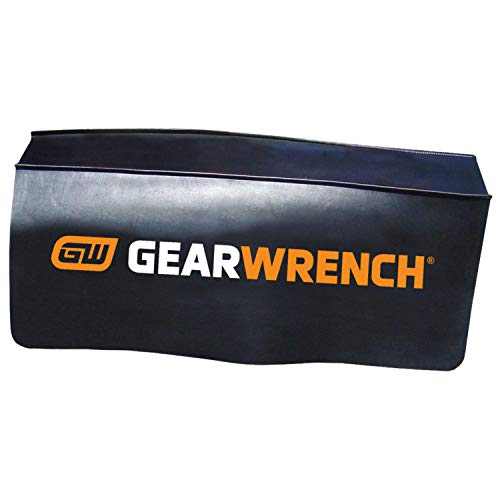
Helps keep vehicle finish free of grease and scratches
Essential Safety Considerations
When detailing a vehicle, safety must be a top priority. Following proper safety protocols is crucial for effective risk management. Start by identifying jack points using your vehicle’s manual. Avoid fragile areas like the oil pan. Always inspect these points for rust or damage first. When using a jack, make certain it’s suitable for your vehicle’s weight. Once lifted, secure it with jack stands to prevent accidents. Use personal protective equipment like gloves and safety glasses. This keeps you safe from harmful chemicals and potential debris. Additionally, maintain a clean work area to minimize trip hazards. Mark off the jacking zone and confirm you’re working in favorable weather conditions. Consider energy-efficient designs to reduce power consumption and extend lifespan up to 50,000 hours. Safety practices help create a safer detailing experience.
Best Practices for Vehicle Maintenance During Detailing
Maintaining a vehicle during detailing is essential for its longevity and appearance. A consistent routine can save money and enhance your ride. Start with monthly deep cleaning using clay bars. They effectively remove stubborn contaminants that regular washes miss. Use quality detailing tools like microfiber towels and wash mitts. Always clean wheels and tires before the painted surfaces. Apply high-quality wax or ceramic sealants for maximum paint protection. Seasonal adjustments are key: use undercarriage sealants in winter and UV protectants in summer. Regular vacuuming and the use of UV protective sprays keep interiors fresh and intact. Finally, avoid harsh soaps that damage paint protection layers post-detailing. Stick to a systematic approach, and your vehicle will shine brilliantly for years to come! Remember, choosing a hydraulic floor jack with reliable safety features can be crucial for vehicle maintenance during detailing.
Recommended Products
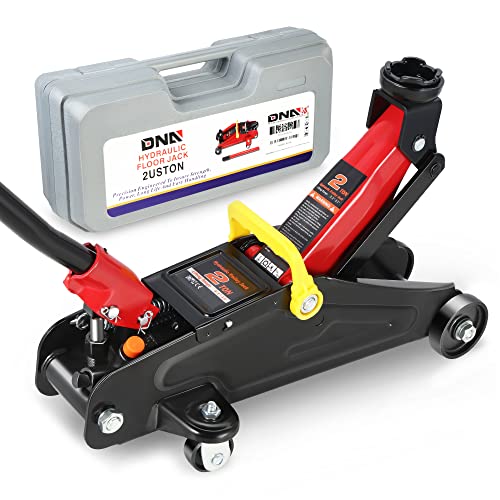
SPEEDY LIFT GARAGE JACK - This Hydraulic Trolley Jack features a 2 ton (4,000 lb) capacity with a min lifting height of 5.1" and a max height of 13". Allows you to easily lift the jack up to desired height, Great for garage service and heavy-duty industrial use. Suitable for vehicles up to 2TON/4000 lbs. Providing you with the essentials to lift and support most cars, Not recommendable for Pick-Up, truck, too big SUVs etc.

✅Capacity & Versatility: We offer a durable floor jack 1.5 ton designed for lifting weights of up to 3,300 lbs effortlessly, offering a lifting range from 5-1/8" to 12". Allows you to easily lift the jack up to desired height.
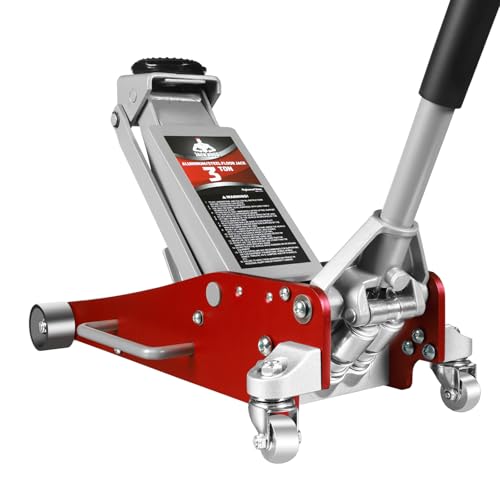
Capacity: Aluminum and steel floor jack can lift up to 3 tons 6600 lbs with a lifting range height of 3-15/16" min to 18-5/16" max.Dimensions:28.3" L x 13.7"W x 7.8"H.Floor jack is used for most Sedans,SUV,MPV,travel trailer,station wagon,mini bus.Package contains rubber saddle and two piece handle
Frequently Asked Questions
Can I Use a Floor Jack on Gravel or Loose Surfaces?
A floor jack on gravel symbolizes an unsteady tower of cards—precarious and vulnerable. Safety concerns emerge as the shifting surface compromises jack stability, making such conditions perilous for both the vehicle and the user involved.
What Type of Jack Is Best for SUVS?
The best SUV jack types include hydraulic floor jacks for stability, bottle jacks for portability, and high-lift jacks for off-road versatility. Lightweight jacks can be useful for convenient handling yet must guarantee safety during use.
How Often Should I Inspect My Jack Stands?
Jack stand safety necessitates inspections at least every six months, with more frequent checks recommended based on usage conditions. Regular inspection frequency guarantees reliability and identifies potential issues before they compromise safety during operation.
Is There a Weight Limit for Jack Stands?
Weight limits on jack stands vary, with typical load capacities ranging from 2 to 20 tons. Proper selection guarantees jack safety, with ratings comfortably exceeding half the vehicle’s weight, promoting stability and peace of mind during use.
Can I Leave the Vehicle Jacked Overnight?
Leaving a vehicle jacked overnight is not recommended without safety precautions. Proper jack stand maintenance and usage guarantees stability, as hydraulic jacks may fail. Always use jack stands rated for the vehicle weight to avoid hazards.