As an Amazon Associate, we earn from qualifying purchases. Some links on this site are affiliate links at no extra cost to you. Our recommendations are based on thorough research and editorial judgment.

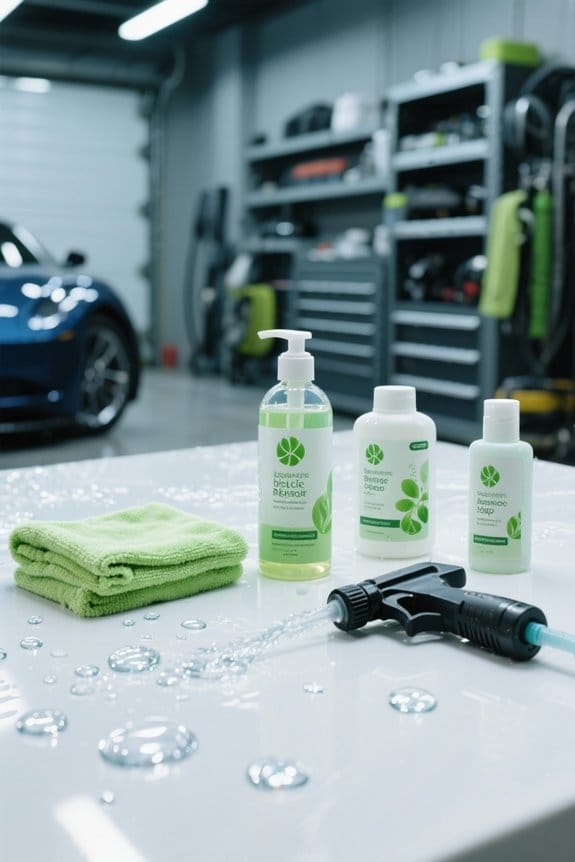
Eco‑Conscious Detailing: Water Usage, Runoff, And Chemical Choices

Eco-conscious detailing focuses on minimizing water usage, harmful runoff, and chemical choices in car care. Traditional washes can use up to 80 gallons of water, while waterless methods reduce that by up to 90%. These practices not only save water but also prevent pollutants from entering local waterways. Choosing biodegradable products further helps protect ecosystems. Many innovative tools, like AI polishers, enhance cleaning efficiency too. Curious about how to implement these sustainable practices? Keep exploring the latest eco-friendly techniques.
Key Takeaways
- Waterless and steam cleaning techniques significantly reduce freshwater consumption and minimize harmful runoff into local ecosystems.
- Utilizing biodegradable and pH-neutral cleaning products helps prevent chemical residues from polluting waterways and protects aquatic health.
- Implementing water recycling systems in car washes can reduce fresh water use by up to 50%, enhancing environmental sustainability.
- Community awareness of car wash runoff effects encourages the use of eco-friendly practices that safeguard local wildlife and water quality.
- Innovations like AI-powered robotic polishers and waterless techniques drastically cut water usage while maintaining effective car cleaning.
Water Consumption in Traditional Car Washes

You may be interested



Traditional car washes vary widely in water usage. Automatic washes generally consume about 50 gallons, while touchless tunnels can use up to 80 gallons. However, advancements in water recycling technology are shifting this norm. Facilities with water reclamation systems can cut fresh water usage by about 50%. This means they treat and reuse water, making for much greater car wash efficiency. Additionally, multi-layer filtration systems found in some air purifiers also contribute to environmental benefits by removing allergens, dust, and harmful gases, which aligns with the growing consumer preference for eco-friendly options. As awareness of environmental issues grows, many consumers now prefer washes that minimize water impact. The balance between cleanliness and conservation is becoming essential for modern car washing practices.
Advantages of Waterless and Steam Cleaning
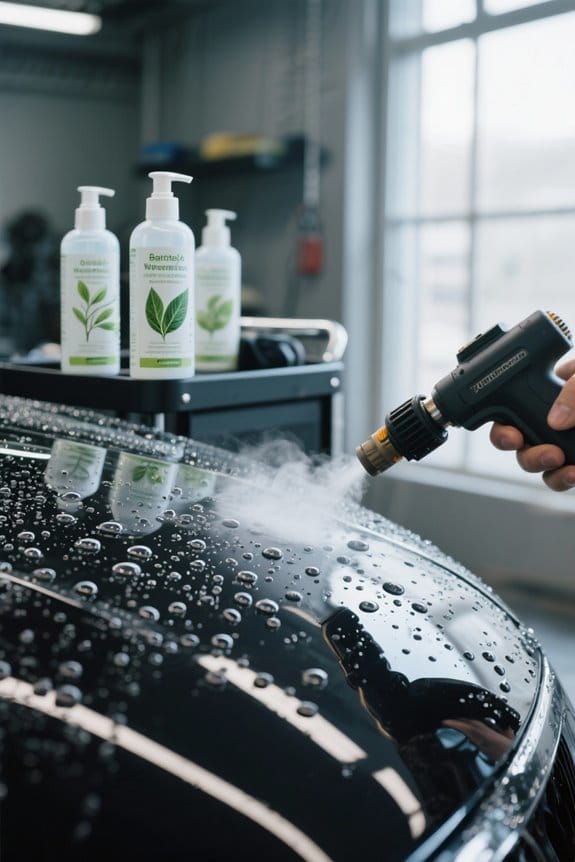
Waterless and steam cleaning methods offer impressive advantages for car owners looking to stay eco-friendly. Waterless technology eliminates the need for freshwater, conserving this valuable resource. It reduces chemical runoff, protecting aquatic ecosystems from harmful detergents. Plus, using biodegradable products means they comply with environmental regulations. Steam efficiency provides an effective way to clean with minimal water. It sanitizes surfaces without harsh chemicals, making it safe for both interiors and exteriors. These methods also preserve car finishes. The lubricants in waterless solutions encapsulate dirt, preventing scratches. Biodegradable and environmentally responsible formulations are key to maintaining an eco-conscious approach while ensuring effective cleaning results. Convenience is another perk. Waterless cleaning can occur anywhere, even in drought areas, and mobile detailing services make it accessible to busy lifestyles. Overall, these methods make cleaning effective and environmentally friendly.
The Impact of Runoff on Local Ecosystems

Runoff from car washes and detailing activities can seriously impact local ecosystems, often in ways that many might not immediately recognize. When untreated runoff flows into storm drains, it carries harmful pollutants. These contaminants can include motor oil, road salt, and heavy metals. Such substances pose risks to aquatic health and can degrade water quality dramatically. Effective runoff management is essential. Excessive nutrients from cleaning products may lead to algal blooms that rob oxygen from water, harming fish and other wildlife. Additionally, microplastics from tire wear can accumulate and disrupt food chains. Communities need to be mindful of how car wash practices affect nearby waterways. Making eco-conscious choices, such as using biodegradable, eco-friendly compositions, can help protect local ecosystems and maintain vibrant aquatic life.
Choosing Eco-Friendly Cleaning Products

Choosing eco-friendly cleaning products is not only a smart choice but often an essential one. These products typically use biodegradable ingredients, which break down naturally and minimize environmental harm. For example, natural soaps with plant-based surfactants reduce chemical residues that pollute runoff water. Opting for cleaners with sustainable sourcing guarantees that materials are harvested responsibly, like carnauba wax from the carnauba palm. This helps protect ecosystems while keeping vehicle surfaces shining. Additionally, eco-friendly products are often pH-neutral and EPA-approved, guaranteeing safety for both users and vehicles. By choosing these products, you reduce exposure to harsh chemicals, making car care healthier and more environmentally friendly. Make the switch—your vehicle and the planet will thank you! Consider using polishing compounds like the Turtle Wax T-417 that are silicone-free and safe for professional use.
Innovations in Sustainable Detailing Techniques

Sustainable detailing techniques are revolutionizing how vehicles are cleaned and protected. Innovations like AI-powered robotic polishers adapt speed and pressure for a thorough finish, enhancing precision. Laser-guided tools offer consistent gloss while minimizing product waste—definitely a win for eco-conscious consumers! Waterless washes, utilizing high-lubricity sprays, can cut water use by 90%. Pairing these with steam cleaning eliminates grime effectively, all while conserving resources. Mobile detailing units further this mission, often equipped with solar energy and smart water systems for efficiency. These advancements not only streamline the detailing process but also contribute to a healthier environment. By choosing these sustainable practices, vehicle owners can enjoy a clean car and contribute positively to the planet. Additionally, having a car emergency kit with essentials like a portable air compressor is crucial for eco-conscious drivers, as it allows them to address roadside issues promptly and responsibly.
Strategies for Effective Water Conservation
Many vehicle owners are often surprised to learn just how much water can be saved during the detailing process. Utilizing water conservation methods can greatly reduce water usage. For example, waterless wash products eliminate rinsing, using biodegradable formulas that lift dirt efficiently. High-pressure steam cleaners also require minimal water while providing effective cleaning techniques. Adopting the two-bucket method and using microfiber cloths further enhances efficiency. Implementing water recycling systems, like ultrafiltration, allows for water reuse within the wash cycle, minimizing waste. Educating clients about these eco-friendly practices encourages broader water conservation. Also, choosing biodegradable products limits rinse needs, protecting both the environment and resources. These strategies make a noticeable difference in sustainable car detailing. Additionally, car trash bags provide a straightforward solution for maintaining vehicle hygiene and reducing clutter while traveling.
The Future of Eco-Conscious Car Detailing Businesses
What will the future hold for eco-conscious car detailing businesses? Growth in this sector is projected to be robust, with the U.S. market expected to reach $20.2 billion by 2026. As consumer awareness increases, customers are more inclined to choose services that prioritize sustainable sourcing. Businesses will adopt biodegradable products, pH-balanced cleaners, and recyclable packaging to meet these demands. Technology will play a significant role too. Smart detailing tools can optimize water use and minimize waste. Additionally, companies may collaborate with dealerships and corporate clients to secure steady demand. Many businesses are also incorporating user-friendly designs in their product offerings to ensure easy adoption and enhance overall customer satisfaction.
Frequently Asked Questions
What Are the Environmental Benefits of Using Biodegradable Cleaning Products?
Using biodegradable formulations offers significant environmental benefits, such as reduced toxicity and improved water quality. Additionally, when paired with sustainable sourcing, these products support ecosystem health and minimize harmful chemical runoff into natural habitats.
How Does Water Usage Impact the Cost of Car Detailing Services?
Water wastage wildly worsens expenses, as cost analysis reveals that efficient water conservation strategies substantially diminish operational costs. Implementing such strategies enhances profitability in car detailing, benefiting both the business and environmentally conscious clientele.
Can I Use Eco-Friendly Products at Home for Car Cleaning?
Yes, eco-friendly products for home cleaning are effective and promote product safety. They reduce environmental impact, minimize harsh chemicals, and often feature biodegradable ingredients, making them safer options for both users and the ecosystem.
Are There Any Certifications for Sustainable Detailing Products?
Various sustainable certifications exist for detailing products, ensuring product efficacy while adhering to environmental standards. Notable certifications include UL ECOLOGO®, EU Ecolabel, and Green Seal, verifying safety, biodegradability, and reduced environmental impact across product lifecycles.
What Role Do Consumers Play in Promoting Eco-Conscious Detailing Practices?
Consumers play a pivotal role in promoting eco-conscious detailing practices through heightened consumer awareness, leading to informed sustainable choices. Their preferences drive demand for environmentally friendly products, compelling businesses to adopt greener practices and enhance accountability.